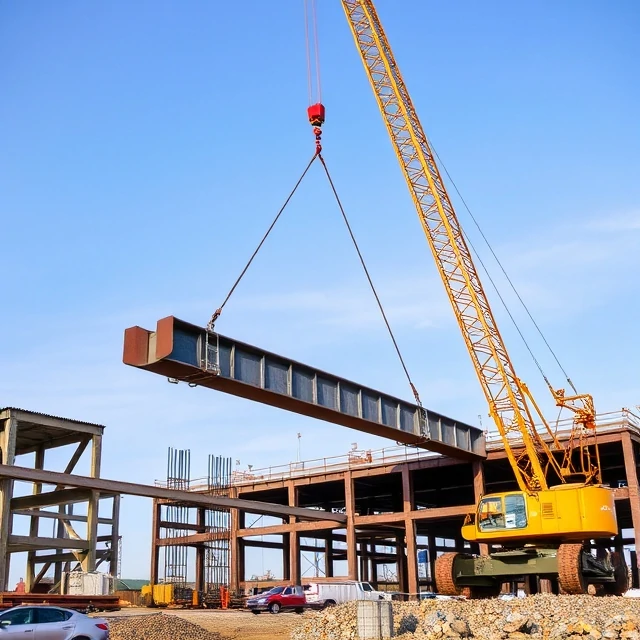
A beam carries loads across a span. In construction, it is a horizontal member that supports a floor, a roof, or a bridge. The top of a loaded beam goes into compression, the bottom into tension, and the middle resists shear. That is why a beam is deepest at the middle and often tapered at the ends. Material is placed where the forces are greatest. The principle applies to kitchen tools as well. A rolling pin is a beam. A knife blade is a beam. A spoon handle is a beam. Each resists bending under load.
Beams come in many materials. A timber beam is simple to cut and fasten but limited in span. A steel beam, like an I-beam, carries heavy loads over long distances. A reinforced concrete beam combines concrete's compressive strength with steel's tensile strength. An engineered wood beam, like glulam, allows longer spans than solid sawn lumber. The choice depends on the span, the load, and the budget.
Deflection often governs the design more than strength. A floor beam that sags too much feels bouncy and can crack finishes. Building codes limit deflection to a fraction of the span, often L/360 for floors. Connections matter too. A beam must transfer its load to columns, walls, or headers. A weak connection can bring down an otherwise sound structure. In the kitchen, a cheap spoon bends under a heavy stew. A good one holds. The beam is the same idea. It spans. It carries. It holds.
Comments
No comments yet. Be the first to share a thought.
Leave a comment