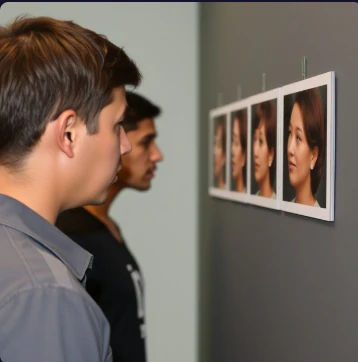
A face in a crowd feels familiar, or a multiple-choice option is correctly selected as the one seen before. Recognition is the judgment that a current stimulus has been previously encountered.
It is typically easier than recall because the stimulus itself serves as a cue. Dual-process models distinguish familiarity—a fast, automatic sense of prior occurrence—from recollection—the slower recovery of contextual details. False recognition occurs when familiarity is present without accurate recollection, as in the Deese-Roediger-McDermott paradigm.
Recognition tests are widely used in education and in laboratory studies of memory. They can be contaminated by guessing and by changes in response bias. In legal settings, lineup recognition carries both power and risk of error. Recognition demonstrates that memory can succeed with less information than full recall requires.
Feeling that something is known is not the same as being able to say what is known about it.
Comments
No comments yet. Be the first to share a thought.
Leave a comment