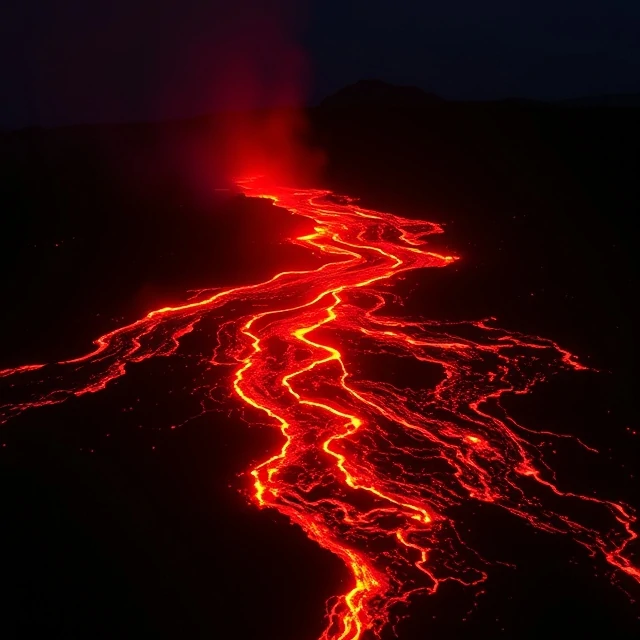
When molten rock reaches the surface it is called lava. The term refers both to the molten material itself and to the solid rock that forms when it cools. Lava temperatures typically range from about 700 °C to 1200 °C depending on composition.
Low-viscosity basaltic lava can flow great distances and build broad shield volcanoes. Higher-viscosity andesitic and rhyolitic lavas pile up near the vent and often erupt explosively. Surface textures such as pahoehoe and aa reflect the viscosity and flow history of basaltic lavas.
Lava flows destroy everything in their path yet also create new land. Cooling joints, vesicular textures, and glassy rinds record the conditions of emplacement. Samples of lava provide direct information about the chemistry of magmas that otherwise remain hidden in the crust or mantle.
- Molten rock erupted onto Earth’s surface
- Cools to form extrusive igneous rock
- Viscosity controls flow style and eruption type
- Builds volcanic landforms and new crust
Comments (2)
Leave a comment