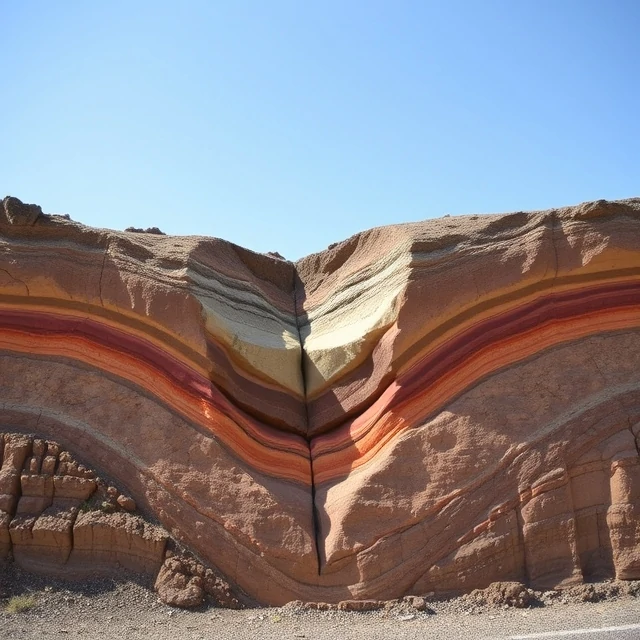
Rocks under stress eventually break. A fault is a fracture surface along which the rock masses on either side have moved relative to each other. Movement may be sudden, producing an earthquake, or slow and continuous as creep.
Faults are classified by the sense of slip: normal faults accommodate extension, reverse and thrust faults accommodate shortening, and strike-slip faults accommodate lateral motion. The San Andreas Fault is a well-known continental strike-slip fault. Fault surfaces may be marked by gouge, slickensides, or breccia.
Active faults pose seismic hazards and are carefully mapped for land-use planning. Ancient faults can act as conduits or barriers to fluid flow, influencing groundwater and petroleum migration. Recognizing fault geometry is fundamental to structural geology and earthquake science.
- Fracture along which rock has moved
- Classified by direction of slip
- Source of most earthquakes
- Influences fluid flow in the crust
Comments
No comments yet. Be the first to share a thought.
Leave a comment