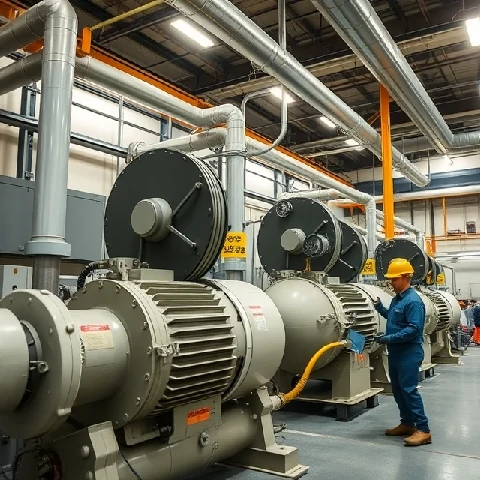
Compressed air energy storage, or CAES, stores energy by squeezing air into underground caverns, depleted gas fields, or salt domes. When electricity is cheap, motors run compressors. When demand spikes, the pressurized air is released, heated, and expanded through turbines to generate power.
The idea is old. The first commercial plant opened in Germany in 1978. A second followed in Alabama in 1991. Both use salt caverns. Newer designs avoid natural gas by capturing and reusing the heat produced during compression. This makes the process cleaner and more efficient.
CAES has advantages. It can store large amounts of energy for long periods, unlike batteries that discharge in hours. It uses cheap, abundant materials. It has limits. Suitable geology is not everywhere. Round-trip efficiency is lower than batteries, often 40 to 60 percent. Building new plants is expensive. Still, as grids add more renewables, long-duration storage like CAES is getting a fresh look.
Key features
- Underground caverns or salt domes
- Large-scale, long-duration storage
- Lower efficiency than batteries
- Geology-dependent
- Diabatic vs. adiabatic designs
Comments
No comments yet. Be the first to share a thought.
Leave a comment