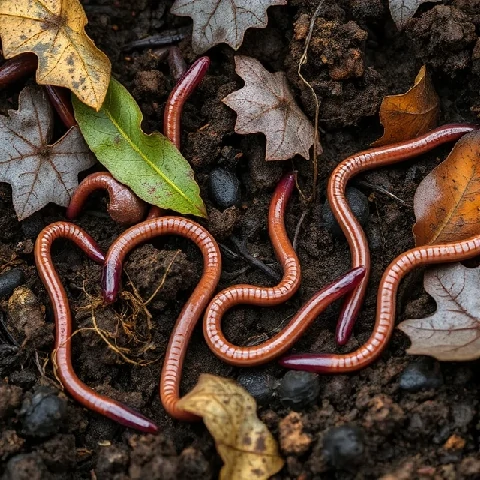
Fallen leaves do not pile up forever. Fungi, bacteria, and invertebrates break them down, releasing nutrients back into the soil. These organisms are decomposers. They feed on dead plant and animal matter, breaking complex organic compounds into simpler forms that plants can absorb. Without them, carbon and nitrogen would stay locked in dead tissue, and life would stall.
Decomposers occupy a special place in food webs. They are not quite producers or consumers. They recycle. Fungi extend networks of hyphae through soil and wood, secreting enzymes that digest matter outside their bodies. Bacteria work at a smaller scale, breaking down compounds molecule by molecule. Detritivores like earthworms, millipedes, and woodlice physically fragment dead matter, making it easier for microbes to act. Together, these organisms turn death into new life.
Common decomposers
- Fungi: mushrooms, molds, and mycelium.
- Bacteria: soil and gut microbes.
- Detritivores: earthworms, millipedes, woodlice.
- Some insects and their larvae.
Decomposition is slow in cold or dry conditions and fast in warm, moist ones. That is why tropical forest soils are thin and nutrient-poor despite the lush growth above. The nutrients are in the living trees, not the ground.
Comments (2)
Leave a comment