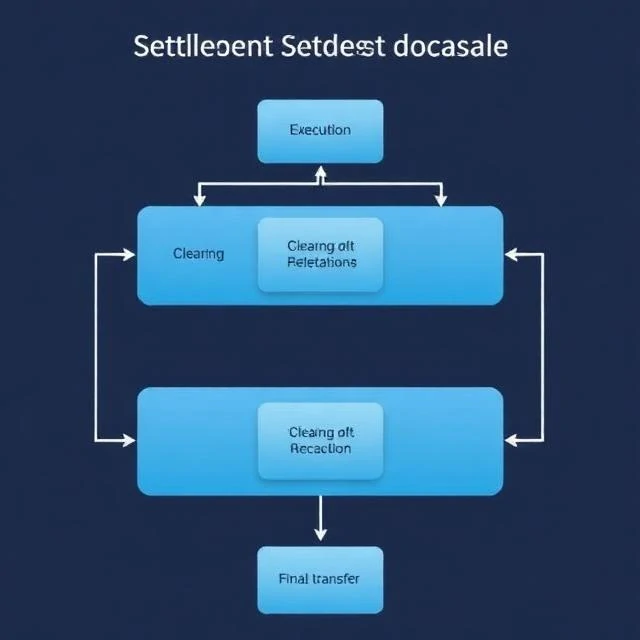
Settlement is the final transfer of funds that completes a financial transaction. It is the moment when the buyer's bank pays the seller's bank and the transaction is legally done. Until settlement occurs, the transaction is pending. The buyer may have the asset, and the seller may have a promise, but the money has not moved.
Settlement times vary by market. In the United States, stock trades settle in one business day, down from five in the 1990s and two until 2024. Government bonds settle in one day. Foreign exchange spot trades settle in two days. Credit card transactions settle in one to two days. ACH transfers settle in one to three days. Wire transfers settle same day. Each market has its own rules and infrastructure.
The infrastructure matters. The Depository Trust and Clearing Corporation settles securities trades in the United States. The Federal Reserve operates Fedwire for large-value payments and FedACH for retail payments. The Clearing House operates CHIPS for international dollar payments. CLS settles foreign exchange trades. These institutions reduce risk by netting transactions and ensuring that both sides of a trade are delivered.
Settlement risk is the risk that one party delivers and the other does not. Central counterparties reduce that risk by stepping between the two sides and guaranteeing performance. That is why settlement is not just a back-office function. It is a systemically important part of the financial system.
Comments
No comments yet. Be the first to share a thought.
Leave a comment