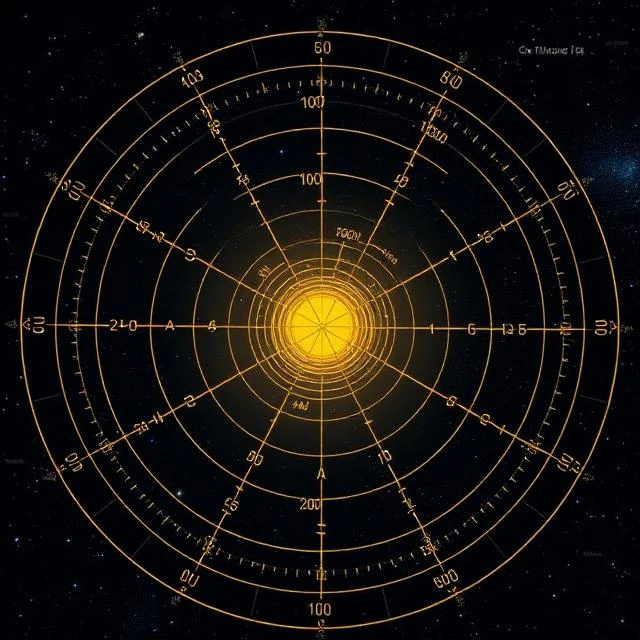
Right ascension is the celestial equivalent of longitude. It measures how far east an object lies from the vernal equinox, the point where the Sun crosses the celestial equator going north. Unlike longitude on Earth, right ascension is measured in hours, minutes, and seconds, not degrees. One hour equals 15 degrees.
The unit comes from the sky's rotation. Earth turns 360 degrees in 24 hours, so the sky appears to rotate 15 degrees per hour. Astronomers use hours to describe position because it directly relates to when an object rises and sets. A star with a right ascension two hours greater than another rises about two hours later.
Right ascension is half of the equatorial coordinate system. The other half is declination, which measures north-south position. Together they give every object a unique address on the sky. A telescope mount with setting circles can point to an object if you know its right ascension and declination.
The zero point of right ascension is the vernal equinox. It drifts slowly westward due to precession, so right ascension coordinates are usually given for a specific epoch, such as J2000. That epoch fixes the reference frame so positions remain comparable over time.
Comments
No comments yet. Be the first to share a thought.
Leave a comment