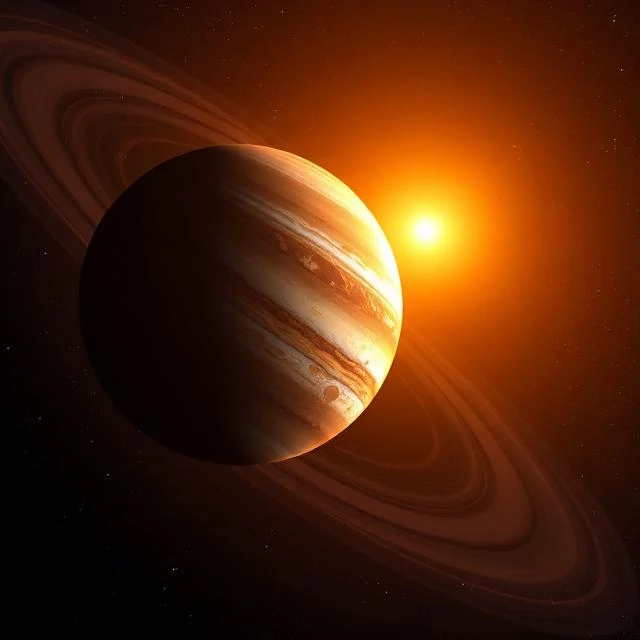
For most of human history, we knew of only one planetary system: our own. That changed in 1995, when Michel Mayor and Didier Queloz announced the discovery of a planet orbiting a sun-like star. It was called 51 Pegasi b, and it was a gas giant orbiting its star in just four days. The discovery won the Nobel Prize in 2019.
Since then, astronomers have confirmed over 5,000 exoplanets. They come in a bewildering variety. Hot Jupiters orbit scorchingly close to their stars. Super-Earths are larger than Earth but smaller than Neptune. Mini-Neptunes have thick atmospheres and rocky cores. Some planets orbit two stars. Some orbit dead stars. Some are free-floating, with no star at all.
The search uses several methods. The transit method watches for dips in starlight as a planet crosses in front of its star. The radial velocity method measures the star's wobble caused by an orbiting planet. Direct imaging can capture the light of a young, large planet far from its star.
The goal is not just to find planets. It is to find habitable ones. The James Webb Space Telescope is already analyzing exoplanet atmospheres for signs of water, methane, and carbon dioxide. The search for life has begun.
Comments
No comments yet. Be the first to share a thought.
Leave a comment