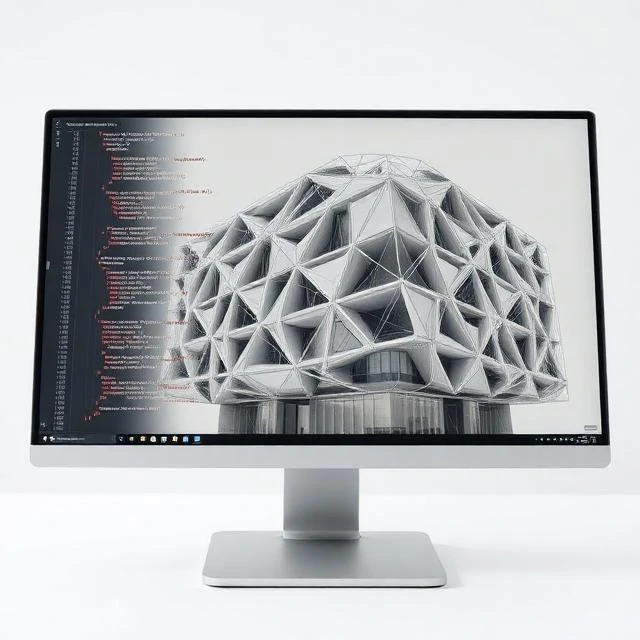
Parametric design uses algorithms to generate geometry based on defined parameters. Instead of drawing a shape, the designer writes rules: the height of a tower is tied to the number of floors, the curve of a roof is driven by a mathematical equation, the pattern of a facade responds to sun angles. Change a parameter, and the geometry updates.
The approach is common in complex projects where many variables interact. A stadium roof might be shaped by structural loads, sightlines, and wind patterns. A facade might have thousands of panels, each sized differently to control daylight. Writing those rules by hand is impractical. Parametric tools automate the process.
Popular software includes Grasshopper, which works with Rhino, and Dynamo, which works with Revit. These tools let designers build visual scripts, connecting nodes to define relationships. The result can be beautiful, but it can also be arbitrary. A parametric design is only as good as the parameters chosen.
Critics argue that parametric design sometimes prioritizes form over function. When used well, it solves problems that would otherwise be intractable. When used poorly, it produces shapes that are expensive to build and hard to justify.
Comments
No comments yet. Be the first to share a thought.
Leave a comment