The wearing away of topsoil by wind, water, or tillage.
🌊
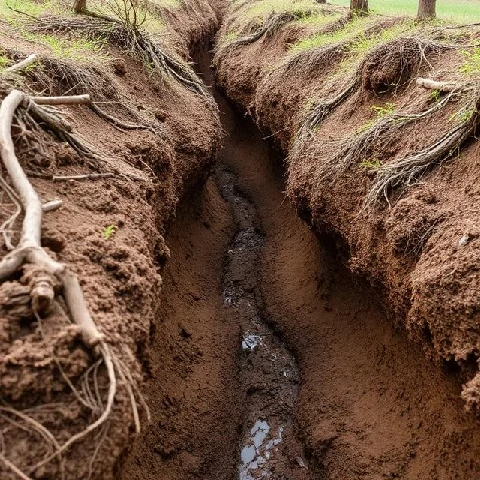
Erosion is the wearing away and transport of soil and rock by natural forces such as water, wind, ice, and gravity, often accelerated by human activities like deforestation, overgrazing, and intensive tillage. Agricultural erosion is particularly concerning because it removes nutrient-rich topsoil faster than it can form, reducing fertility, water-holding capacity, and crop yields. Water erosion includes sheet, rill, and gully erosion; wind erosion removes fine particles and can create dust storms, as in the 1930s American Dust Bowl. Global soil erosion is estimated at 20–30 billion tonnes per year, with the highest rates in Asia, Africa, and South America. Consequences include sediment pollution of waterways, nutrient runoff, loss of biodiversity, and carbon release. Conservation practices such as no-till farming, cover cropping, contour ploughing, terracing, windbreaks, and grassed waterways reduce erosion. The FAO's Global Soil Partnership promotes sustainable soil management to protect this finite resource.
Comments (3)
Tom H
Interesting how wind and water both do the same job but in different environments. Coastal cliffs versus desert dunes.
Aisha R
We saw serious soil erosion after the heavy rains last spring on my grandparents' farm. The topsoil just washed away in places.
Lina
Is there a difference between erosion and weathering? I keep seeing them used interchangeably in articles.
Comments (3)
Leave a comment