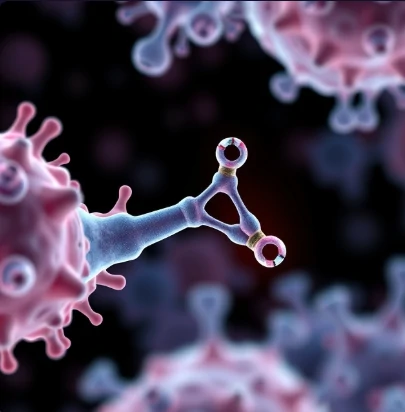
Antibodies are proteins the immune system uses to recognize and neutralize foreign invaders. A monoclonal antibody is a laboratory-made copy of a single antibody, produced by identical immune cells that are all clones of one parent cell. That means every molecule is the same, targeting the same specific epitope. The precision makes them powerful tools for treating cancer, autoimmune diseases, and infectious diseases.
The technology dates to the 1970s, when researchers fused an antibody-producing cell with a myeloma cell to create a hybridoma that could grow indefinitely and produce a single antibody. Since then, the field has moved to recombinant DNA methods, which allow scientists to engineer antibodies with human, mouse, or chimeric sequences. Humanized antibodies reduce the risk of immune reactions against the drug itself. Monoclonal antibodies can block a receptor, neutralize a virus, deliver a drug payload, or recruit immune cells to kill a target. They are usually given by infusion or injection because they would be destroyed in the digestive tract.
Examples include:
- Trastuzumab. Targets HER2-positive breast cancer.
- Rituximab. Targets CD20 on B cells for lymphoma and autoimmune diseases.
- Adalimumab. Targets TNF for rheumatoid arthritis and Crohn's disease.
- Pembrolizumab. Targets PD-1 to boost immune attack on cancer.
Biosimilars of several monoclonal antibodies are now available, bringing prices down for some treatments.
Comments
No comments yet. Be the first to share a thought.
Leave a comment