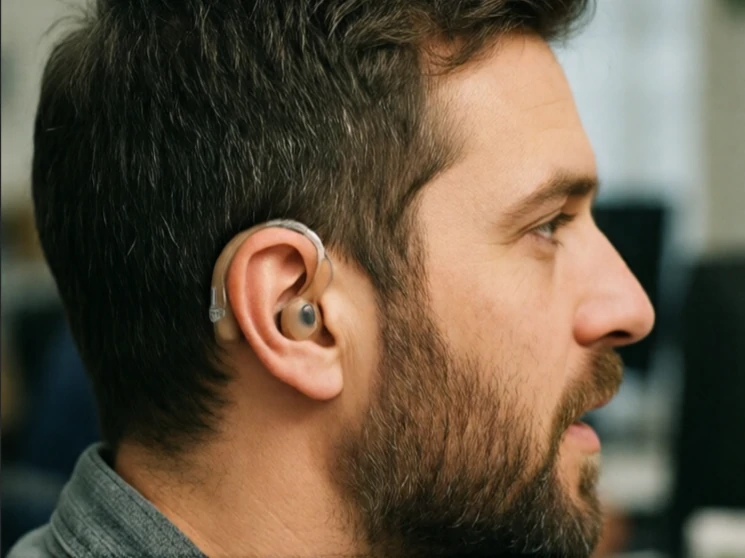
A cochlear implant is a medical device that provides a sense of sound to a person with severe to profound sensorineural hearing loss. It bypasses damaged hair cells and stimulates the auditory nerve directly with electrical pulses.
The system has external and internal components. A microphone and speech processor worn behind the ear analyze incoming sound and convert it into a pattern of electrical signals. Those signals are transmitted across the skin to a receiver-stimulator implanted in the bone behind the ear, which then sends pulses to an array of electrodes threaded into the cochlea. Different electrodes stimulate different regions of the auditory nerve, roughly recreating the place coding of frequency.
Outcomes vary. Children implanted early and given strong language support often develop spoken language skills that approach those of hearing peers. Adults who lose hearing after acquiring language usually regain significant speech understanding, though music perception remains limited. The device does not restore normal hearing; it provides a usable auditory signal that the brain must learn to interpret.
For many users the cochlear implant opens a channel to sound that would otherwise remain closed.
Comments
No comments yet. Be the first to share a thought.
Leave a comment