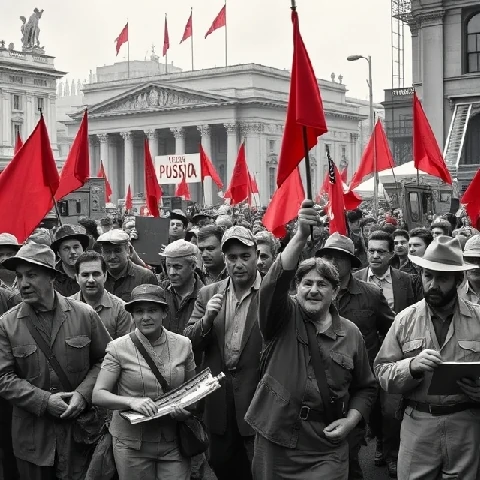
Collective or public ownership of the principal means of production and a stronger emphasis on equality characterize socialism as a political and economic ideology. Socialists argue that unrestrained markets produce unjust inequalities and that democratic control should extend into economic life.
Historical socialism ranges from revolutionary Marxism to democratic socialism and social democracy that accept mixed economies with extensive welfare states. Twentieth-century experiments with comprehensive state ownership produced both industrialization and serious failures of efficiency and political freedom. Contemporary socialist politics often focuses on expanding public services, regulating capital, and reducing wealth concentration within democratic frameworks.
Critics contend that socialism underestimates information and incentive problems and risks concentrating power in the state. Supporters reply that democratic socialism can combine social ownership or strong regulation with political liberty. The debate continues to structure left-of-center politics in many countries.
Socialist parties that accept electoral democracy have become part of the ordinary landscape of European and other party systems.
Comments (3)
Leave a comment