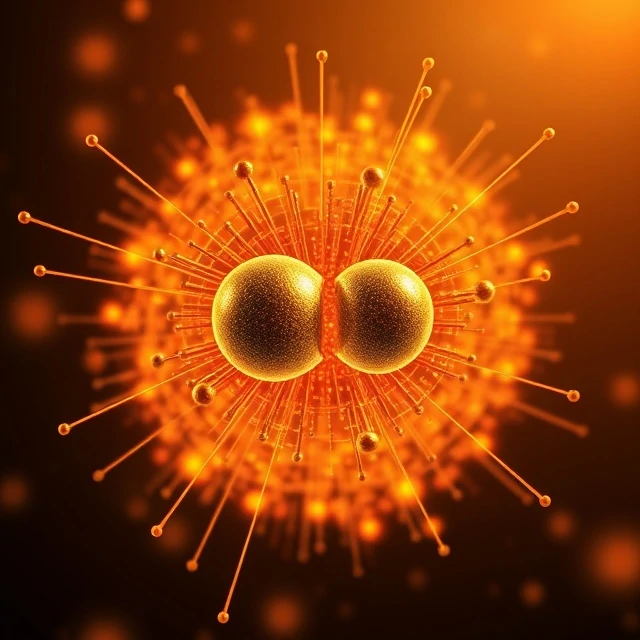
Split an atom and release energy. That is nuclear fission, the process of splitting a heavy atomic nucleus into lighter ones. When a neutron strikes a uranium-235 nucleus, the nucleus absorbs the neutron, becomes unstable, and splits into two smaller nuclei, releasing two or three neutrons and a large amount of energy. Those neutrons can strike other uranium nuclei, causing a chain reaction. In a nuclear reactor, the chain reaction is controlled. In a nuclear weapon, it is uncontrolled.
Fission releases energy because the total mass of the products is slightly less than the mass of the original nucleus. The missing mass is converted into energy according to E = mc². A single fission event releases about 200 million electron volts, which is millions of times more energy than a chemical reaction. Nuclear power plants use fission to generate electricity. The heat from the chain reaction turns water into steam, which drives turbines. Fission produces radioactive waste, which remains dangerous for thousands of years. That waste is one of the main challenges of nuclear power. The other is safety. Accidents at Chernobyl and Fukushima released radioactive material and shook public confidence in the technology.
Fission facts
- Definition. Splitting of heavy nuclei.
- Fuel. Uranium-235 and plutonium-239.
- Chain reaction. Neutrons released can trigger more fission.
- Energy. E = mc², mass converted to energy.
- Applications. Nuclear power, nuclear weapons.
Nuclear fission is not the same as nuclear fusion. Fission splits heavy nuclei. Fusion combines light nuclei.
Comments
No comments yet. Be the first to share a thought.
Leave a comment