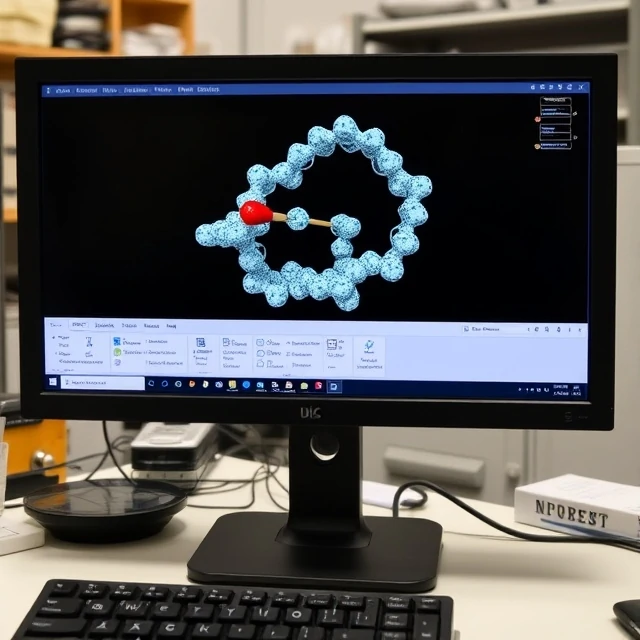
Instead of screening thousands of compounds and hoping for a hit, rational drug design starts with knowledge of the biological target. If the structure of a protein is known, chemists can design molecules that fit its active site. If the target is an enzyme, they can design inhibitors that block its activity. The approach is called rational because it is based on understanding the target, not on trial and error.
The process usually begins with structural biology. X-ray crystallography, cryo-electron microscopy, or nuclear magnetic resonance reveals the three-dimensional shape of the target. Computational tools then model how potential drugs might bind. Chemists synthesize the most promising candidates and test them. The results feed back into the model, and the cycle repeats. Rational design has produced drugs for HIV, influenza, and cancer, among others. It is faster and more efficient than random screening, but it depends on having a well-characterized target and good structural data.
Steps in rational drug design:
- Target identification. Finding a protein or pathway involved in disease.
- Structural determination. Solving the three-dimensional structure of the target.
- Computational modeling. Predicting how molecules will bind.
- Synthesis and testing. Making and testing candidate molecules.
- Iteration. Refining the design based on results.
Rational design does not always succeed. Some targets are too flexible or too similar to other proteins, making selective drug design difficult.
Comments
No comments yet. Be the first to share a thought.
Leave a comment