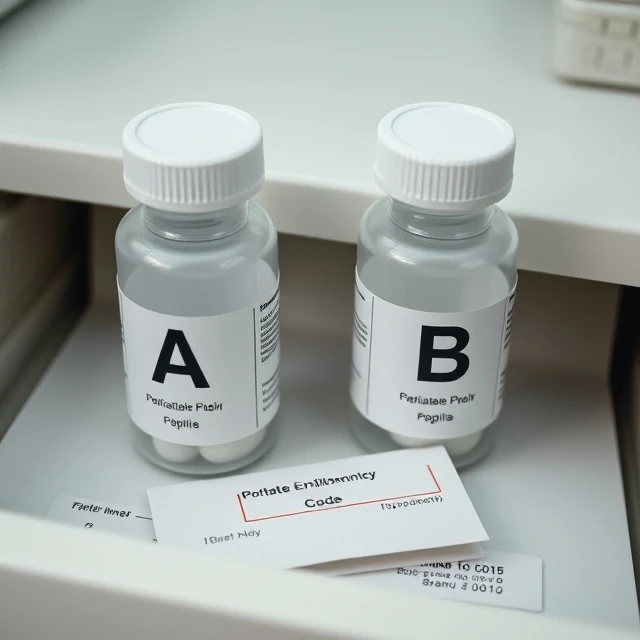
The best clinical trials hide two things: who gets the treatment, and who knows. A double-blind study keeps both participants and researchers in the dark about treatment assignments until the end. That design reduces bias from two directions at once, and it is the gold standard for testing drugs.
Why both? Participants who know they are getting a real drug may report improvement that is partly placebo. Researchers who know which participants are in the treatment arm may unconsciously rate symptoms differently, encourage one group more, or interpret ambiguous results in a way that favors the hypothesis. Double-blinding removes those channels of influence. In practice, the pharmacy or a central randomization service holds the code. The drug and placebo are made to look and taste identical. If a medical emergency requires unblinding, the code can be broken for that one participant.
Key features:
- Randomization. Participants are assigned to groups by chance.
- Matching. Placebo and treatment look, taste, and smell the same.
- Code security. Assignment information is held separately from the trial team.
- Unblinding. Allowed only when necessary for safety or at the end of the study.
Triple-blind studies go further by keeping the statisticians unaware of group assignments until analysis is complete.
Comments
No comments yet. Be the first to share a thought.
Leave a comment