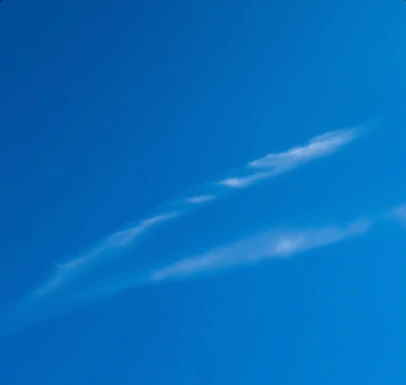
High in the troposphere, where temperatures stay well below freezing, ice crystals form delicate, feathery clouds. These are cirrus. They appear thin and wispy, often stretched by strong upper-level winds into long streamers or mare’s tails.
Cirrus usually signal fair weather in the short term, yet they can also mark the leading edge of an approaching warm front. Their ice composition produces optical effects such as halos around the sun or moon when the crystals are hexagonal.
Because they sit so high, cirrus do not produce precipitation that reaches the ground. They do, however, affect the radiation balance by reflecting some sunlight and trapping some outgoing heat. Aircraft contrails can evolve into cirrus-like clouds under the right conditions.
Observers note their presence as an early clue to changing weather patterns aloft.
Comments
No comments yet. Be the first to share a thought.
Leave a comment