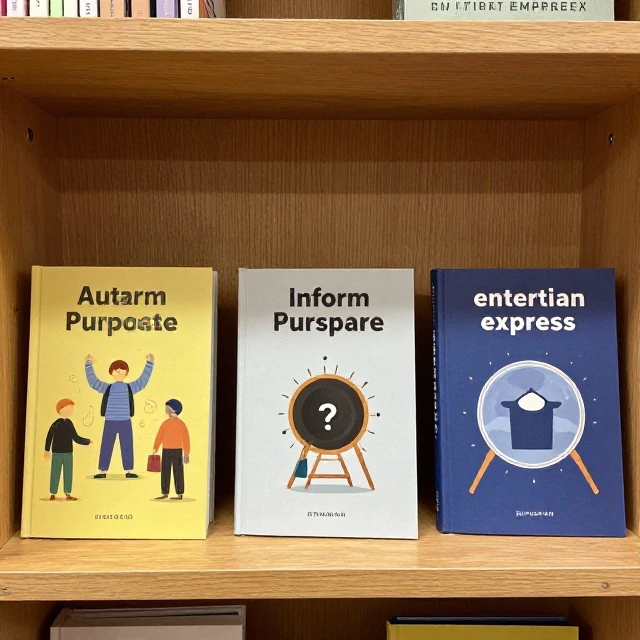
An author writes for a reason. That reason shapes every choice: word selection, sentence length, evidence, tone. The purpose might be to inform, to persuade, to entertain, or to express. A textbook informs. A campaign speech persuades. A thriller entertains. A private journal expresses. Most texts mix purposes, but one usually dominates.
Identifying purpose is a reading skill. Look at the title. Consider the audience. Examine the tone. A scientific paper uses neutral language and cites data. An opinion column uses emotional appeals and rhetorical questions. The same topic can be handled with different purposes. A article about climate change might inform in one publication and persuade in another.
Four main purposes
- Inform: present facts and explanations.
- Persuade: convince the reader to believe or act.
- Entertain: engage and amuse.
- Express: convey personal thoughts and feelings.
Purpose is not always stated. Sometimes the reader must infer it. A satirical essay entertains on the surface but persuades underneath. A memoir expresses personal experience but also informs about a time or place. The purpose determines how the reader should approach the text. Read an informative text for facts. Read a persuasive text for arguments. Read an entertaining text for pleasure. The author's purpose is the text's reason for existing. Without it, the words are just words.
Comments
No comments yet. Be the first to share a thought.
Leave a comment