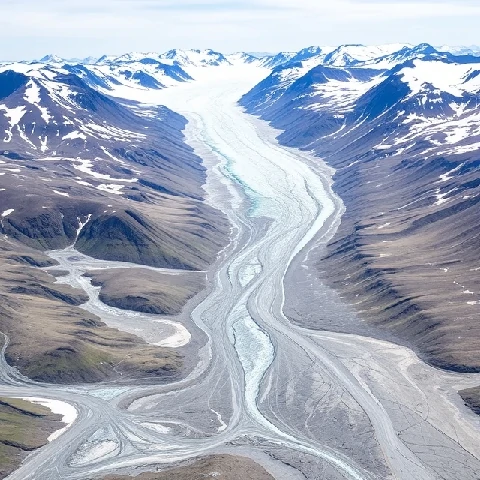
Ice sheets have advanced and retreated many times in Earth history. Glaciation is the process by which glaciers and ice sheets cover substantial areas of land. Continental glaciation involves ice sheets of continental scale; alpine glaciation is confined to mountain ranges.
During glacial periods, ice scours bedrock, transports enormous volumes of sediment, and deposits characteristic landforms such as moraines, drumlins, and eskers. Global sea level falls as water is locked in ice. Climate, ocean circulation, and ecosystems all shift in response.
The Quaternary Period has been marked by repeated glacial-interglacial cycles paced by orbital variations. Evidence survives in glacial landforms, marine sediment cores, and ice cores. Understanding past glaciation provides context for modern ice-sheet response to warming.
- Coverage of land by glaciers or ice sheets
- Produces distinctive erosional and depositional landforms
- Lowers global sea level during advances
- Repeated many times in the Quaternary
Comments (2)
Leave a comment