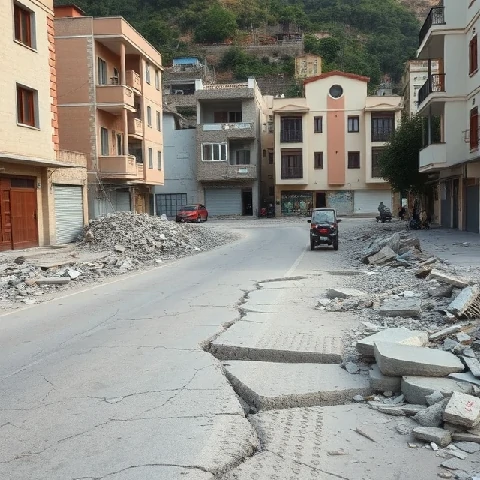
The ground can suddenly lurch and roll. An earthquake is the shaking that results when rocks on either side of a fault slip past each other and release stored elastic energy. Seismic waves radiate outward from the focus and cause the damage felt at the surface.
Most earthquakes occur along tectonic plate boundaries. Magnitude scales measure the energy released; intensity scales describe the shaking felt at particular locations. Aftershocks often follow the main event as the crust adjusts.
Building codes, early-warning systems, and public drills reduce casualties in prepared regions. Yet large earthquakes still cause widespread destruction, especially where structures are not designed to resist lateral motion. Seismologists monitor faults and refine probabilistic forecasts, but exact prediction remains elusive.
- Sudden ground shaking from fault movement
- Releases stored elastic energy
- Most common at plate boundaries
- Measured by magnitude and intensity scales
Comments
No comments yet. Be the first to share a thought.
Leave a comment