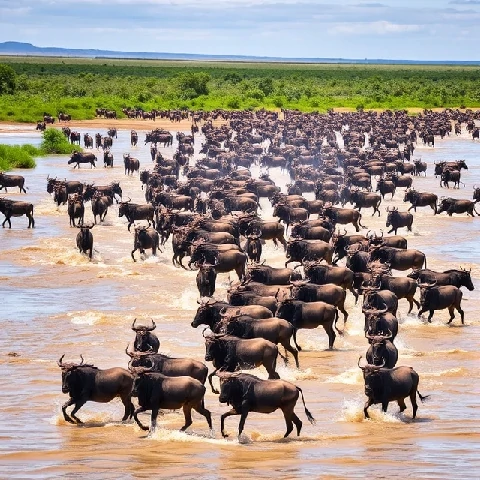
Arctic terns fly from the Arctic to the Antarctic and back every year, a round trip of roughly 70,000 kilometers. That is migration: the movement of organisms from one region to another, usually seasonal and often over long distances. Animals migrate to find food, escape cold, reach breeding grounds, or follow rainfall. Birds, whales, wildebeest, monarch butterflies, and salmon all migrate. Some migrations are short, moving up and down a mountain. Others cross oceans and continents.
Migration requires navigation. Birds use the sun, stars, Earth's magnetic field, and landmarks. Salmon return to the stream where they hatched, guided by smell. Monarch butterflies that migrate to Mexico have never been there before; they follow a route encoded in their genes. Migration is risky. Storms, predators, and habitat loss along the route take a toll. Climate change is shifting the timing of migrations and the availability of food at stopover sites. Some species are arriving at breeding grounds before their food has emerged.
Why animals migrate
- Follow seasonal food sources.
- Reach breeding or spawning grounds.
- Escape harsh weather.
- Track rainfall and fresh grazing.
Migration connects distant ecosystems. A bird that nests in the Arctic and winters in South America links two continents through its journey.
Comments
No comments yet. Be the first to share a thought.
Leave a comment