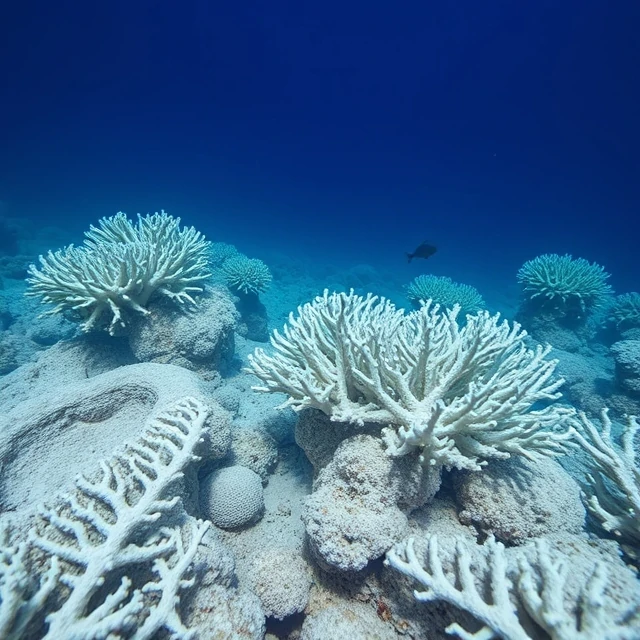
Coral reefs are among the most diverse ecosystems on Earth. They are built by corals, small animals that secrete calcium carbonate skeletons. Over thousands of years, these skeletons accumulate and form complex structures that shelter thousands of species. Reefs cover less than one percent of the ocean floor but support about a quarter of all marine species. Fish, crustaceans, mollusks, sponges, and algae all depend on the habitat corals create.
Corals live in symbiosis with microscopic algae called zooxanthellae, which give them color and provide most of their energy through photosynthesis. When water gets too warm, corals expel the algae and turn white, a process called bleaching. Bleached corals are not dead, but they are stressed and may die if conditions do not improve. Mass bleaching events have become more frequent as ocean temperatures rise. Pollution, overfishing, and ocean acidification add to the pressure. Scientists estimate that half of the world's coral reefs have already been lost or severely degraded.
Threats to reefs
- Warming oceans and mass bleaching.
- Ocean acidification from carbon dioxide.
- Overfishing and destructive fishing practices.
- Pollution and coastal development.
Reef restoration projects are underway in many regions. They grow corals in nurseries and transplant them onto damaged reefs. The work is slow and expensive, but it buys time.
Comments (2)
Leave a comment