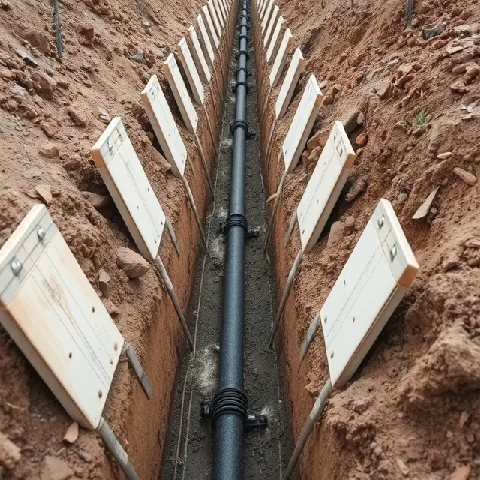
Excavation removes earth to prepare for construction. It is one of the first steps on a building site. The ground is dug to create a basement, a foundation, a utility trench, or a drainage system. The excavated soil is stockpiled, hauled away, or reused as fill. Excavation is dangerous work. Trenches can collapse. Equipment can tip. Utilities can be struck. It requires planning, permits, and safety measures.
Excavation methods depend on the depth, the soil, and the site. A shallow excavation for a footing can be dug by hand or with a mini-excavator. A deep excavation for a basement requires a larger machine and shoring. Shoring supports the sides of the excavation to prevent collapse. It can be made of steel, wood, or aluminum. In some cases, the sides are sloped instead of shored. The slope depends on the soil type. OSHA regulations specify the requirements.
Excavation must avoid damaging utilities. The site must be marked for underground gas, water, electric, and telecommunications lines. A call to the local utility locating service is required before digging. Striking a gas line can cause an explosion. Striking an electric line can cause electrocution. Excavation also affects the environment. Erosion and sediment must be controlled. Dewatering may be needed if the excavation fills with groundwater. The excavated soil must be tested for contamination before it is reused or disposed of. Excavation is not just digging. It is a regulated, technical, and hazardous operation.
Comments
No comments yet. Be the first to share a thought.
Leave a comment