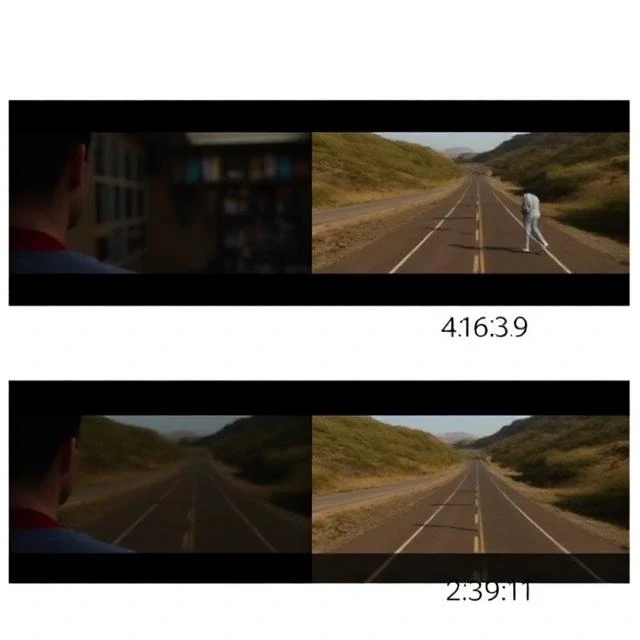
Aspect ratio describes the proportional relationship between an image's width and height. It is written as two numbers separated by a colon. The classic television ratio is 4:3, which means four units wide for every three units high. The widescreen standard is 16:9. Cinema has used many ratios over the decades, including 1.85:1, 2.39:1, and 1.33:1. The ratio shapes how a director composes a frame and how the audience experiences it.
The choice of aspect ratio is not neutral. A tall ratio like 4:3 emphasizes vertical space, intimacy, and faces. It can feel closed-in or classical. A wide ratio like 2.39:1 emphasizes landscape, scale, and horizontal movement. It can feel epic or isolating. Wes Anderson uses symmetrical 1.37:1 frames for some films. Christopher Nolan shot parts of The Dark Knight in IMAX, which is closer to 1.43:1. The shape of the frame is part of the storytelling.
Changing ratios within a film can signal a shift in time, perspective, or reality. In The Grand Budapest Hotel, Anderson uses three different ratios for three different eras. In Dunkirk, Nolan uses IMAX for aerial combat and standard widescreen for intimate scenes. The ratio is not just a technical setting. It is a visual language.
Comments
No comments yet. Be the first to share a thought.
Leave a comment