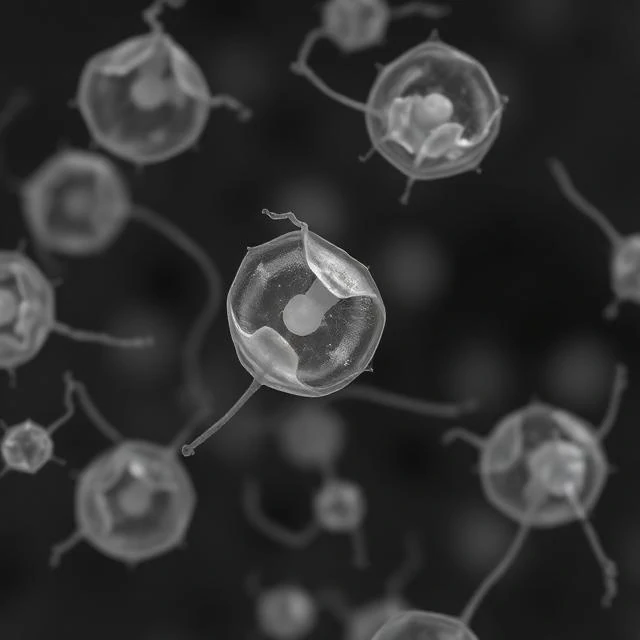
Yeast is a unicellular fungus. It is everywhere: on fruit, in soil, in the air. There are over 1,500 known species, but one, Saccharomyces cerevisiae, is the most famous. It is baker's yeast and brewer's yeast. It ferments sugars into alcohol and carbon dioxide, which makes bread rise and beer bubble. Humans have used it for thousands of years, long before they knew what it was.
In biotechnology, yeast is a workhorse. It is easy to grow, genetically tractable, and capable of performing many post-translational modifications that bacteria cannot. It is used to produce insulin, vaccines, and enzymes. It is used to make biofuels and industrial chemicals. It is used as a model organism in genetics and cell biology. Many fundamental discoveries about the cell cycle, gene regulation, and protein trafficking were made in yeast.
Yeast is also a tool for synthetic biology. Its genome has been synthesized from scratch in a global project. Its metabolic pathways have been engineered to produce opioids, cannabinoids, and flavors. It can be programmed to sense and respond to environmental signals. It is a versatile chassis for biological engineering.
Yeast is not just a microbe. It is a partner in human civilization. It makes our food, our drink, and our medicines. It is also a window into the basic biology of eukaryotic cells.
Comments
No comments yet. Be the first to share a thought.
Leave a comment