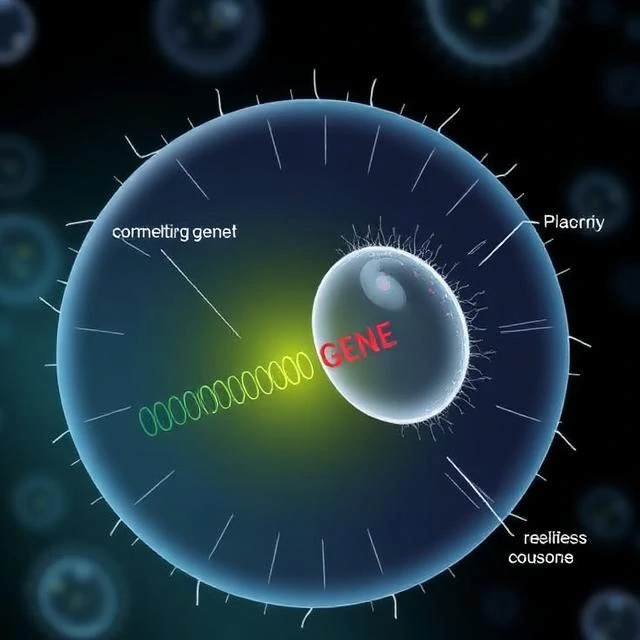
In genetic engineering, a vector is a carrier that delivers genetic material into a host cell. It is the vehicle that transports a gene into a cell where it can be replicated or expressed. The most common vectors are plasmids, but viruses, cosmids, and artificial chromosomes are also used. The choice depends on the size of the gene, the host cell, and the purpose.
Vectors have several requirements. They must be able to replicate in the host cell. They must have a selectable marker, usually an antibiotic resistance gene, so that cells that took up the vector can be identified. They must have a cloning site where the gene of interest can be inserted. They must be able to deliver the gene to the right compartment of the cell. For expression, they need a promoter and other regulatory elements.
Viral vectors are used for gene therapy. Lentiviruses integrate their genetic payload into the host genome, providing long-term expression. Adenoviruses do not integrate, so expression is temporary but safer. Adeno-associated viruses are small, non-pathogenic, and capable of long-term expression in non-dividing cells. Each has advantages and risks.
The word vector has another meaning in infectious disease. A vector is an organism, like a mosquito or tick, that transmits a pathogen from one host to another. The two meanings are related: both are carriers. Context determines which one is meant.
Comments
No comments yet. Be the first to share a thought.
Leave a comment