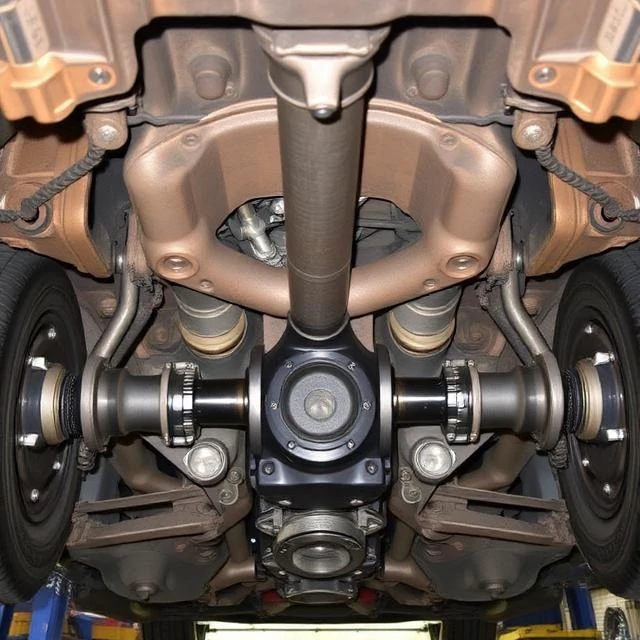
A driveshaft transmits torque from the transmission to the axle. It is a rotating tube, usually made of steel or aluminum, with universal joints at each end. The joints allow the shaft to flex as the suspension moves. Without a driveshaft, a rear-wheel-drive car could not send power from the front-mounted engine to the rear wheels.
In a rear-wheel-drive car, the driveshaft runs from the transmission tailshaft to the rear differential. It spins at engine speed, or close to it, and must be balanced to avoid vibration. At high speeds, an unbalanced shaft can shake the car violently. That is why driveshafts are precision-balanced and why the universal joints are inspected for wear.
Front-wheel-drive cars usually do not have a long driveshaft. Instead, they use two half-shafts, also called CV axles, that connect the transaxle to the front wheels. Each half-shaft has constant-velocity joints that allow the wheels to steer and move up and down. All-wheel-drive cars may have a driveshaft to the rear axle plus half-shafts at all four wheels.
Driveshafts are strong, but they can fail. A worn universal joint can cause a clunking noise or vibration. A broken driveshaft can whip around and damage the underside of the car. Regular inspection of the joints and carrier bearings prevents most problems.
Comments (2)
Leave a comment