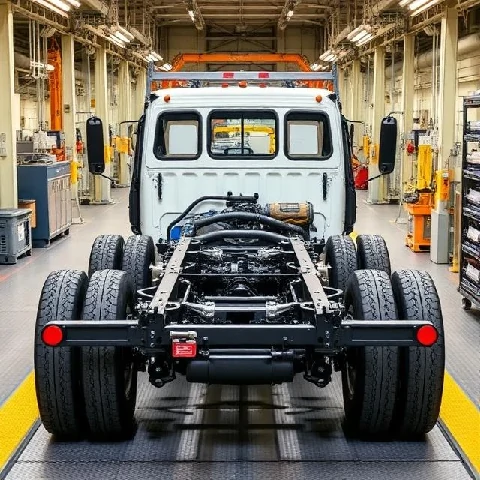
The chassis is the frame or structure that supports a vehicle's components and body. It carries the engine, transmission, suspension, and wheels. It absorbs the forces of driving and protects occupants in a crash. In older vehicles, the chassis was a separate frame. In most modern cars, the chassis and body are integrated into a single structure called a unibody.
A body-on-frame chassis uses a strong ladder frame, with the body bolted on top. Trucks and large SUVs often use this design because it is rugged and can handle heavy loads. A unibody chassis uses stamped steel panels welded together to form a stiff shell. It is lighter and more space-efficient, which is why most cars and crossovers use it.
Chassis design affects handling, ride, and safety. A stiff chassis lets the suspension do its job without flexing. A well-designed crumple zone absorbs crash energy before it reaches the passenger compartment. A low center of gravity improves stability. Engineers use computer simulations and physical tests to tune these characteristics.
The word chassis comes from the French châssis, meaning frame. It is the skeleton of the car. Everything else hangs on it.
Comments
No comments yet. Be the first to share a thought.
Leave a comment