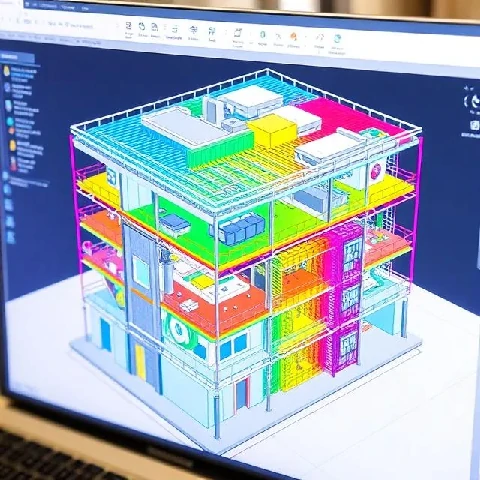
Building Information Modeling, or BIM, is a digital representation of a building that goes far beyond 3D geometry. A BIM model contains data: what each wall is made of, how much it weighs, what it costs, when it needs maintenance. It is a database disguised as a model.
Architects use BIM to coordinate drawings. Engineers use it to check structural and mechanical clashes. Contractors use it to plan construction sequences and estimate quantities. Owners use it to manage facilities after occupancy. The same model can serve all these purposes if it is built and maintained carefully.
BIM changes how teams work. Instead of exchanging drawings, they share a model. Conflicts are found before construction, not on site. Changes propagate automatically. But BIM also demands discipline. A poorly managed model can become a liability.
The technology is still maturing. Standards, contracts, and workflows are evolving. But the direction is clear: buildings are increasingly designed, built, and operated through data.
Comments
No comments yet. Be the first to share a thought.
Leave a comment