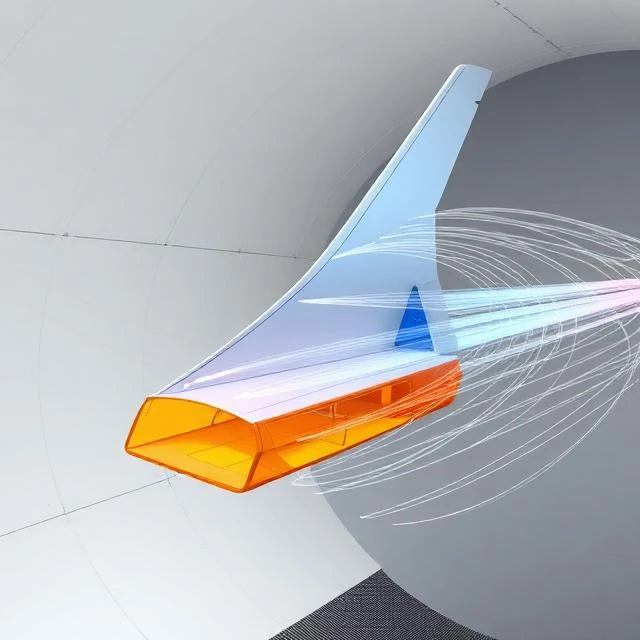
Cut a wing in half and look at the cross-section. That curved shape is an airfoil, and it generates lift because air moves faster over the curved top than the flatter bottom. Faster air means lower pressure, and the pressure difference pushes the wing upward.
The shape varies with purpose. Thick airfoils create lots of lift at low speed, which suits transport aircraft. Thin, sharp airfoils work better at supersonic speeds. Camber, thickness, and leading-edge radius all change how the wing behaves.
Key airfoil terms
- Chord line, the straight line from leading to trailing edge
- Camber, the curvature of the mean line
- Angle of attack, the wing's angle to the oncoming air
- Stall angle, where lift collapses
Propellers, helicopter blades, and turbine fan blades all use airfoil sections. Same physics, different applications.
Comments
No comments yet. Be the first to share a thought.
Leave a comment