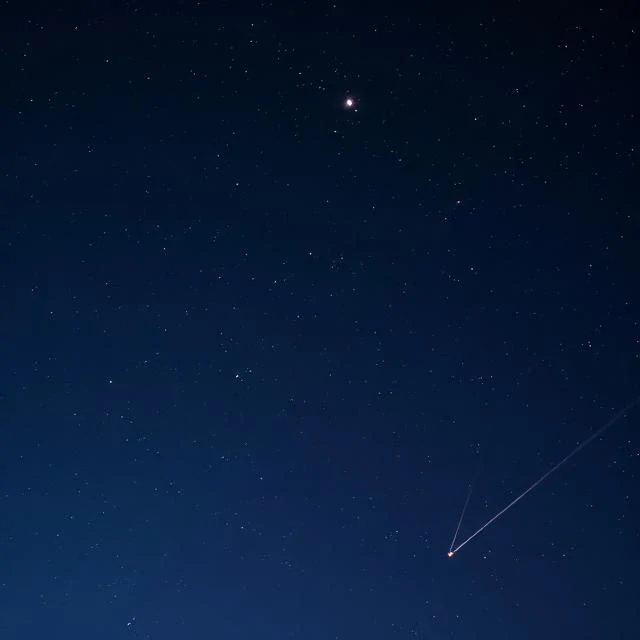
Hipparchus ranked stars by brightness over two thousand years ago, dividing them into six classes. The brightest he called first magnitude. The faintest he could see were sixth magnitude. That ancient system survives, though it has been refined and extended far beyond what the naked eye can detect.
The scale is logarithmic and runs backward. A smaller number means a brighter object. Each step of one magnitude corresponds to a brightness ratio of about 2.512, so a first-magnitude star is roughly 100 times brighter than a sixth-magnitude star. Sirius, the brightest night star, sits at magnitude -1.46. The Sun blazes at -26.7. The faintest objects Hubble has imaged reach magnitude 30 or dimmer.
Astronomers distinguish apparent magnitude from absolute magnitude. Apparent magnitude is how bright an object looks from Earth, which depends on both its true luminosity and its distance. Absolute magnitude is how bright it would appear from a standard distance of 10 parsecs. Comparing the two reveals distance, which is why magnitude is more than a catalog number.
Comments
No comments yet. Be the first to share a thought.
Leave a comment