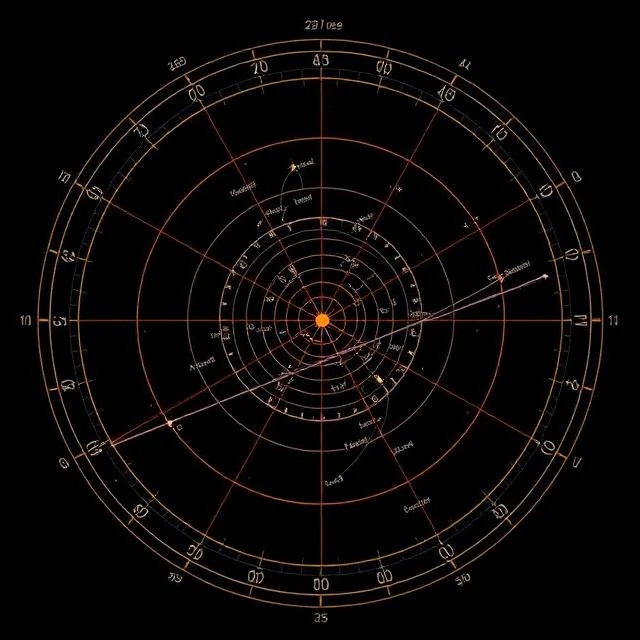
Declination is the celestial equivalent of latitude. It measures how far north or south an object lies from the celestial equator. The celestial equator is 0 degrees. The north celestial pole is plus 90 degrees. The south celestial pole is minus 90 degrees. Every star, galaxy, and planet has a declination.
Declination is one half of the coordinate system astronomers use to locate objects on the sky. The other half is right ascension, which is measured in hours, minutes, and seconds eastward from the vernal equinox. Together they give a unique address. If you know an object's declination and right ascension, you can point a telescope at it.
Declination also determines whether an object is visible from a given latitude. A star with a declination equal to your latitude passes directly overhead. A star with a declination more than 90 degrees minus your latitude away from the pole never rises above your horizon. That is why the Southern Cross is invisible from most of the United States.
Declination changes slowly over time because Earth's axis wobbles. This precession shifts the celestial poles in a circle over about 26,000 years. The star Polaris will not always be the North Star.
Comments
No comments yet. Be the first to share a thought.
Leave a comment