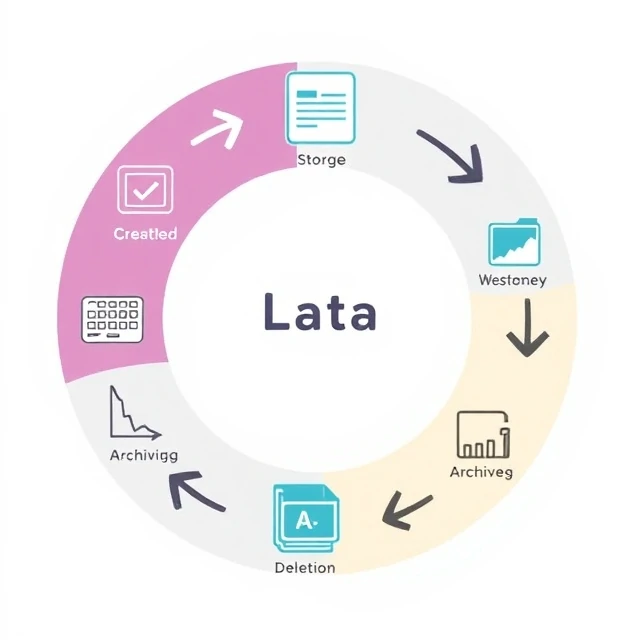
Data has a lifecycle. It is created, stored, used, shared, archived, and eventually deleted. Each stage has its own requirements. Creation needs validation. Storage needs security and backup. Use needs access controls. Sharing needs privacy protections. Archiving needs retention policies. Deletion needs to be secure and verifiable. Managing the lifecycle means knowing where data is at every stage and applying the right controls.
Most organizations manage the early stages well. They collect data and store it. The later stages get neglected. Data that should be archived sits in production databases, slowing queries and increasing costs. Data that should be deleted lingers for years, creating legal and security risk. Retention policies exist on paper but not in practice. The consequences accumulate. Storage costs rise. Breach impact grows because more data is exposed. Legal discovery becomes expensive because old data must be searched. A lifecycle approach prevents this. Define retention periods for each data type. Automate archiving and deletion. Verify that the policies are working. Data is an asset while it is useful. It becomes a liability when it outlives its purpose.
Lifecycle stages
- Creation — data is generated or captured
- Storage — data is saved and secured
- Use — data is accessed and analyzed
- Sharing — data is distributed to others
- Archiving — data is moved to long-term storage
- Deletion — data is securely destroyed
Data does not manage itself. Without a lifecycle plan, it accumulates until someone forces a cleanup.
Comments
No comments yet. Be the first to share a thought.
Leave a comment