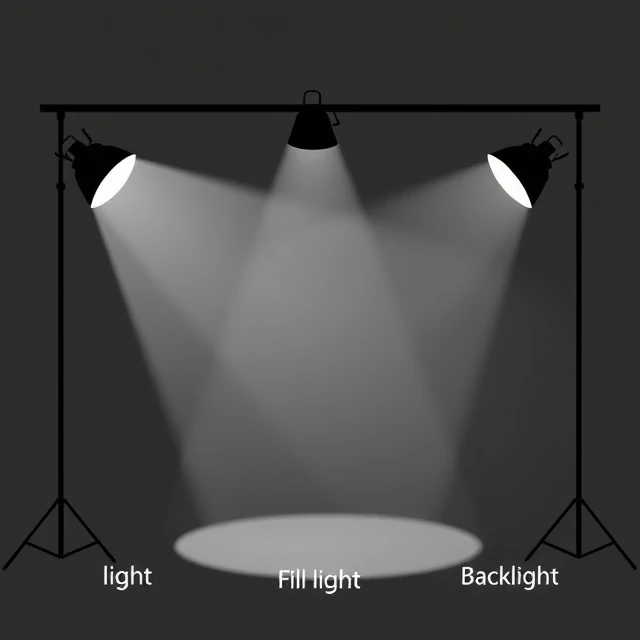
Three-point lighting is a standard setup using three lights: the key light, the fill light, and the backlight. The key light is the primary source, positioned at a 45-degree angle from the camera. It illuminates the subject and creates shadows. The fill light is a secondary source, positioned opposite the key. It softens the shadows and reduces contrast. The backlight is positioned behind the subject, aimed at the camera. It separates the subject from the background and creates a rim of light. Together, the three lights create a controlled, dimensional image.
Three-point lighting is a starting point, not a rule. Cinematographers adjust the ratio of key to fill, the color of the lights, and the position of each light. A high key-to-fill ratio creates a dramatic, low-key image. A low ratio creates a bright, high-key image. A warm key and a cool fill create contrast. A backlight with a gel creates a colored rim. The variations are endless. The three-point setup is the foundation. The cinematographer builds on it.
Three-point lighting is used in film, television, photography, and theater. It is taught in every film school. It is the basis of classical Hollywood lighting. It creates a polished, professional look. But it is not the only way to light a scene. Some filmmakers use natural light. Some use a single light. Some use no lights at all. The three-point setup is a tool. It is not the only tool. But it is the one that every filmmaker should understand.
Comments
No comments yet. Be the first to share a thought.
Leave a comment