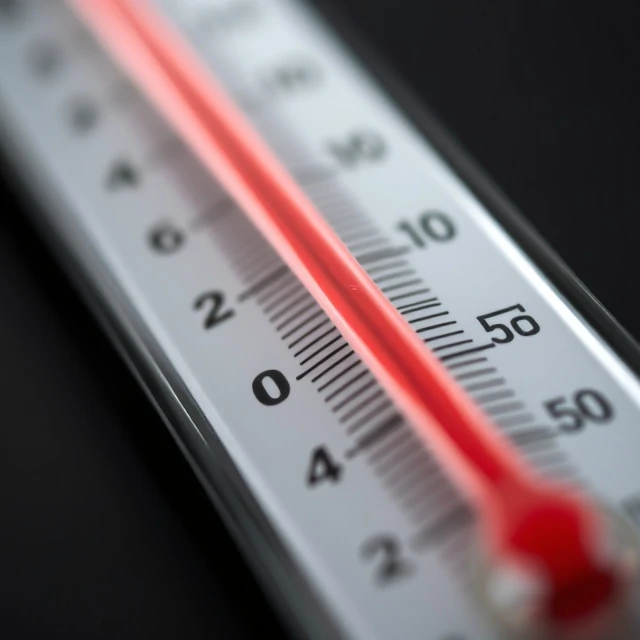
Temperature is a measure of the average kinetic energy of particles in a substance. It is not the same as heat. Heat is the transfer of thermal energy. Temperature is a property of a system. A cup of boiling water has a higher temperature than a bathtub of warm water, but the bathtub contains more heat because it has more water. Temperature is measured in degrees Celsius, Fahrenheit, or Kelvin. Kelvin is the SI unit. Zero Kelvin, or absolute zero, is the lowest possible temperature, where particles have minimum kinetic energy. It is about -273.15 degrees Celsius.
Temperature determines many properties of matter. It determines the state of a substance. Ice melts at 0 degrees Celsius. Water boils at 100 degrees Celsius at sea level. Temperature affects density, solubility, and reaction rates. It affects the speed of sound. It affects the color of a hot object, which glows red, then orange, then white as it gets hotter. Temperature is measured with thermometers, which use different principles. Mercury thermometers use thermal expansion. Thermocouples use voltage differences. Infrared thermometers use radiation. Temperature is one of the most fundamental and most measured quantities in science.
Temperature facts
- Definition. Average kinetic energy of particles.
- Units. Celsius, Fahrenheit, Kelvin.
- Absolute zero. 0 K, -273.15°C.
- Water. Freezes at 0°C, boils at 100°C.
- Measurement. Thermometers, thermocouples, infrared.
Temperature is not the same as heat. Temperature is a measure. Heat is a transfer.
Comments
No comments yet. Be the first to share a thought.
Leave a comment