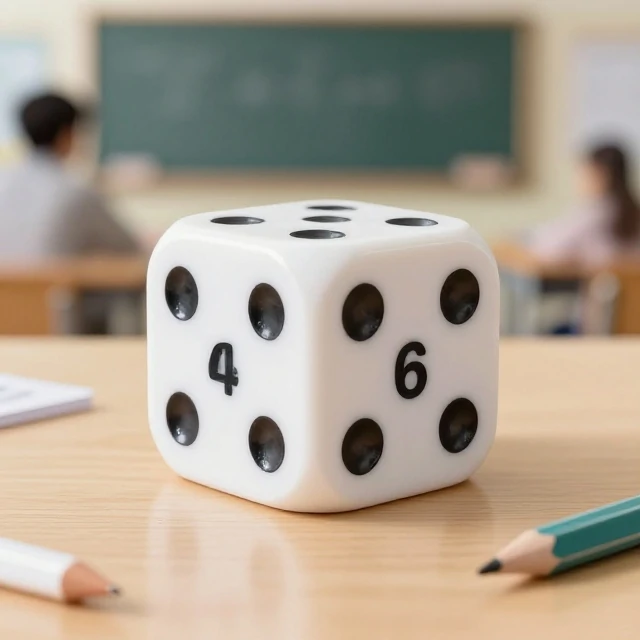
Theoretical probability is the likelihood of an event based on all possible outcomes, assuming each outcome is equally likely. Flip a fair coin. There are two outcomes: heads and tails. The theoretical probability of heads is 1/2. Roll a fair six-sided die. There are six outcomes. The theoretical probability of rolling a 3 is 1/6.
The formula is the number of favorable outcomes divided by the total number of possible outcomes. It assumes the outcomes are equally likely. That is the key assumption. A biased coin does not have a theoretical probability of 1/2 for heads. The coin is not fair. The outcomes are not equally likely. Theoretical probability only applies to fair experiments.
Theoretical probability examples
- Coin flip: 1/2 for heads.
- Die roll: 1/6 for any number.
- Card draw: 1/52 for any card.
- Spinner: depends on the number of equal sections.
- Lottery: 1 in millions for the jackpot.
Theoretical probability is a prediction. It tells you what should happen in the long run. It does not tell you what will happen in the next trial. Flip a coin ten times and you might get seven heads. The theoretical probability is still 1/2. The experimental probability is 7/10. Run more trials and the experimental probability approaches the theoretical. That is the law of large numbers. Theoretical probability is exact. It is calculated from the structure of the experiment. It does not require any trials. It is the foundation of probability theory. It is used in gambling, insurance, and quality control. It is the math of uncertainty.
Comments
No comments yet. Be the first to share a thought.
Leave a comment