Start with 0 and 1. Add them to get 1. Add 1 and 1 to get 2. Add 1 and 2 to get 3. The sequence continues: 0, 1, 1, 2, 3, 5, 8, 13, 21, and so on. Each term is the sum of the two before it.
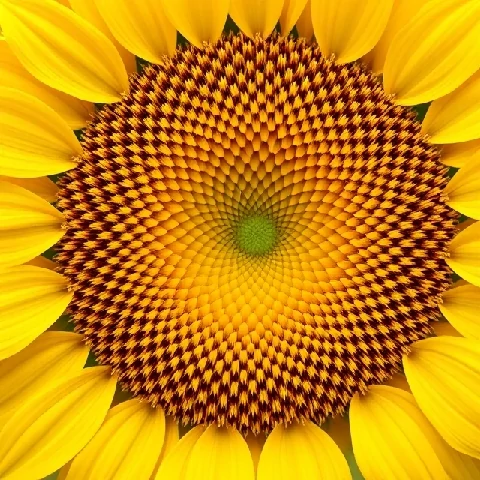
The sequence appears in nature: the arrangement of leaves on a stem, the spirals of a pinecone, the branching of trees. The ratio of consecutive terms approaches the golden ratio, approximately 1.618. That number has fascinated artists, architects, and mathematicians for centuries.
Fibonacci introduced the sequence to Europe in 1202, though Indian mathematicians had studied it earlier. It appears in computer science, biology, and financial modeling. The sequence is simple to generate but rich in properties.
- Each term is the sum of the two before it
- Starts 0, 1, 1, 2, 3, 5, 8...
- Ratio of consecutive terms approaches the golden ratio
- Appears in nature and computer science
Comments (3)
Leave a comment