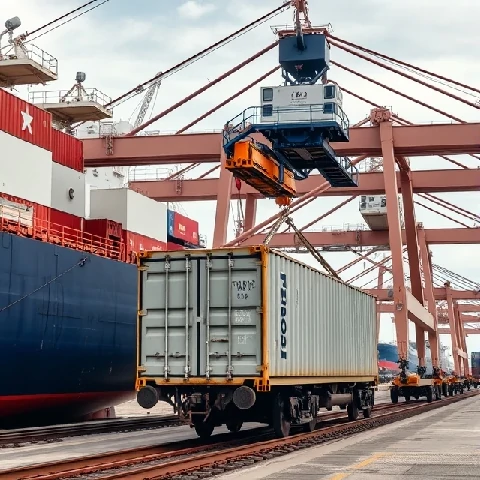
Long journeys rarely stay on a single type of vehicle. Intermodal transport is the movement of goods in the same loading unit or vehicle by successive modes—typically ship, rail, and road—without handling the goods themselves at transfer points.
Containers are the classic intermodal unit; swap bodies and semi-trailers also move intermodally in some regions. Transfer terminals use cranes and specialized handling equipment to shift units between modes quickly. The approach combines the long-haul economy of rail or sea with the flexibility of road for final delivery.
Documentation and liability frameworks must cover the entire journey. Schedule coordination among modes determines whether intermodal stays competitive with pure road transport. When it works well, intermodal reduces cost and emissions on suitable corridors.
- Movement by successive modes in one loading unit
- Avoids handling the goods at modal transfers
- Commonly uses containers, swap bodies, or trailers
- Combines economy of long-haul modes with road flexibility
Comments
No comments yet. Be the first to share a thought.
Leave a comment