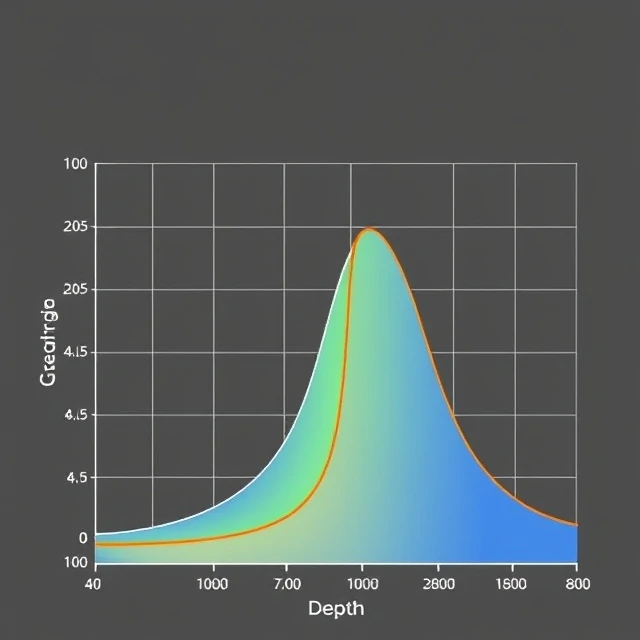
Temperature rises as one goes deeper into the Earth. The geothermal gradient is the rate of that increase, typically about 25–30 °C per kilometer in the upper crust, though values vary widely with tectonic setting.
In stable continental interiors the gradient is relatively low; in volcanic regions and at mid-ocean ridges it can be much steeper. Heat sources include residual heat from planetary accretion, decay of radioactive isotopes, and latent heat from core crystallization. Conductive heat flow measured at the surface reflects the gradient and the thermal conductivity of the rocks.
Knowledge of the geothermal gradient is essential for interpreting metamorphic conditions, designing deep boreholes, and assessing geothermal energy potential. Where the gradient is high enough, hot water or steam can be extracted for power generation or direct heating. Local anomalies often point to magma bodies or circulating fluids.
- Rate of temperature increase with depth
- Averages 25–30 °C/km in continental crust
- Varies with tectonic setting
- Important for geothermal energy and metamorphism
Comments
No comments yet. Be the first to share a thought.
Leave a comment