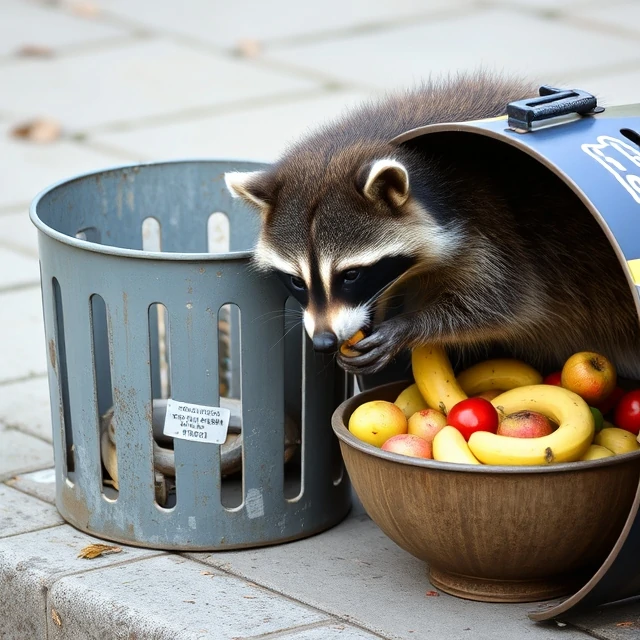
Omnivores eat both plants and animals. Humans are omnivores. So are bears, raccoons, pigs, chickens, and many ants. The category is broad. Some omnivores eat mostly plants and occasionally meat. Others eat mostly meat and occasionally plants. What unites them is flexibility. Omnivores can switch between food sources as availability changes, which gives them an advantage in variable environments. Bears eat berries in summer and salmon in fall. Raccoons eat fruit, insects, eggs, and garbage.
Omnivory has costs. Digestive systems built for both plant and animal matter are less specialized than those of strict herbivores or carnivores. Omnivores often have moderate teeth and guts rather than extreme adaptations. They also face more competition, since they overlap with both herbivores and carnivores. But the trade-off usually pays off. Flexibility allows omnivores to survive when one food source fails. It has made humans exceptionally adaptable, capable of living on diets from nearly all meat to nearly all plants.
Examples of omnivores
- Bears: berries, fish, insects, small mammals.
- Raccoons: fruit, insects, eggs, carrion.
- Pigs: roots, grains, insects, small animals.
- Chickens: seeds, insects, worms, small vertebrates.
Omnivory is not a lack of specialization. It is a different strategy, one that favors adaptability over efficiency.
Comments
No comments yet. Be the first to share a thought.
Leave a comment