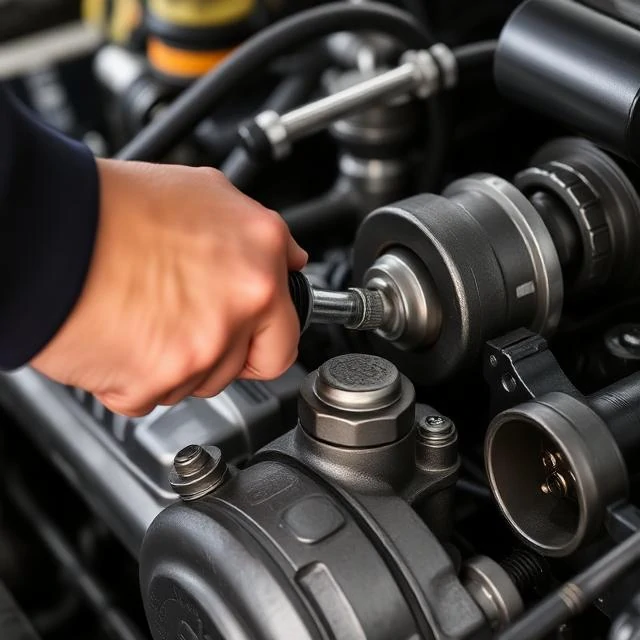
A wrench grips and turns nuts and bolts. It is a simple tool with a simple job: apply torque without slipping. The jaws or the socket fit the fastener, and the handle provides leverage. Get the fit wrong, and the wrench rounds the corners of the nut. Get it right, and the fastener breaks loose with a satisfying crack. Mechanics, plumbers, and ironworkers all carry wrenches. The tool has been around in some form for centuries, and no one has improved on the basic idea.
Wrenches come in many types. An open-end wrench has a U-shaped jaw and grips two sides of the nut. A box-end wrench has a closed ring with twelve points, allowing it to grip more corners and work in tight spaces. A combination wrench has one of each. An adjustable wrench has a movable jaw, so one tool fits many sizes, though it slips more easily. A socket wrench uses interchangeable sockets and a ratcheting handle, which is faster than repositioning a fixed wrench. A pipe wrench has serrated jaws and a self-tightening grip, designed for round pipe rather than hex nuts.
Size matters more than brand. Metric and imperial wrenches are not interchangeable. A 13mm wrench on a 1/2-inch nut will round it. The wrench should fit snugly, with no wobble. For stubborn fasteners, a longer handle or a cheater bar adds leverage, but too much force can snap the bolt or the wrench. The wrench is a lever. It multiplies force. That is its power and its danger.
Comments
No comments yet. Be the first to share a thought.
Leave a comment