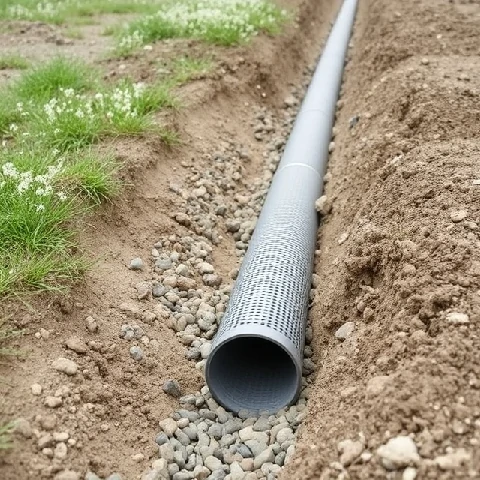
Drainage removes excess water from a site or structure. Water is the most destructive force in construction. It erodes soil, undermines foundations, floods basements, and rots materials. A good drainage system moves water away from the building and off the site. It includes gutters, downpipes, French drains, swales, catch basins, storm sewers, and retention ponds. It is a system, not a single component. Each part must work with the others.
Surface drainage handles water on the surface. The site is graded so that water flows away from the building. Swales are shallow channels that direct water to a catch basin or a storm drain. Subsurface drainage handles water below the surface. French drains are gravel-filled trenches with perforated pipes that collect groundwater and carry it away. Foundation drains, also called footing drains, collect water around the base of a foundation. They are essential in wet climates.
Drainage must be designed. The soil type, the water table, the rainfall, and the site topography all matter. A site that does not drain properly can flood, erode, and settle. In urban areas, drainage connects to the municipal storm sewer system. In rural areas, it may discharge to a ditch, a stream, or a dry well. Some jurisdictions require retention ponds to hold stormwater and release it slowly. Drainage is regulated. It is also a matter of common sense. Water flows downhill. The building must be above it, and the water must have somewhere to go.
Comments
No comments yet. Be the first to share a thought.
Leave a comment