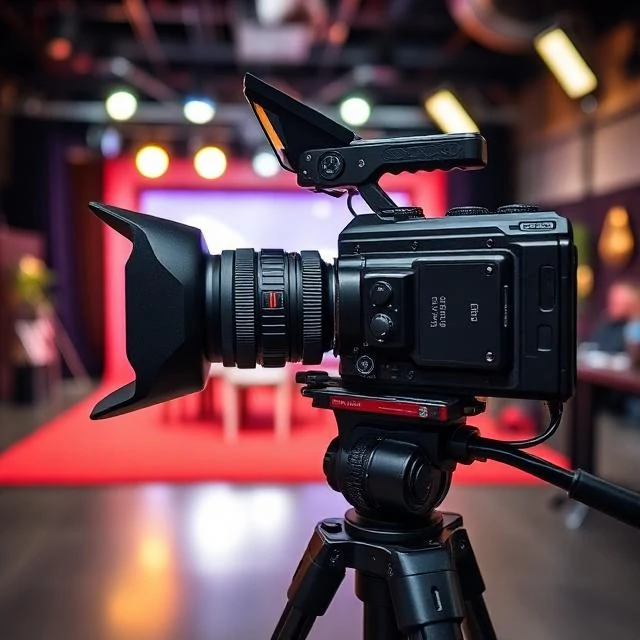
A camera records images by capturing light onto a sensor or film. It is the primary tool of cinema. A still camera takes one image. A motion picture camera takes a sequence of images, usually 24 frames per second, which when projected create the illusion of movement. The camera is not just a recording device. It is a creative instrument. The choice of lens, the movement, the angle, and the exposure all shape the image and the story.
Modern film cameras come in several types. Digital cinema cameras, like the ARRI Alexa and RED Komodo, record to memory cards or drives. They offer high resolution, wide dynamic range, and flexible frame rates. Film cameras, like the Panavision and Arriflex, use 35mm or 65mm film stock. Some directors prefer the look of film, which has a distinct grain and color rendition. Both have their advocates.
The camera is operated by a cinematographer or a camera operator. The camera may be mounted on a tripod, a dolly, a crane, or a Steadicam. It may be handheld. It may be remote-controlled. Each setup creates a different feel. A handheld camera feels immediate and unstable. A dolly shot feels smooth and deliberate. A crane shot feels sweeping and epic. The camera is not just a window. It is a participant in the scene.
Comments
No comments yet. Be the first to share a thought.
Leave a comment