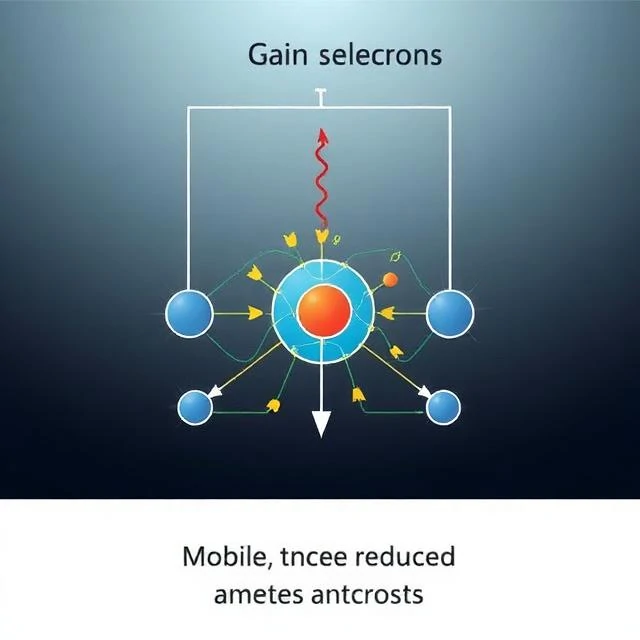
Reduction is the gain of electrons by a substance. It is the opposite of oxidation. The two always occur together in redox reactions. The substance that gains electrons is reduced. Its oxidation state decreases. The term originally referred to the removal of oxygen from a metal ore, but it now covers any gain of electrons. The mnemonic OIL RIG helps: Oxidation Is Loss, Reduction Is Gain.
Reducing agents donate electrons and are themselves oxidized. Common reducing agents include hydrogen, carbon, and metals like sodium and zinc. In the extraction of iron from iron ore, carbon reduces iron oxide to iron. The carbon is oxidized to carbon dioxide. In the production of aluminum, electrolysis reduces aluminum oxide to aluminum. The process requires enormous amounts of electricity.
Reduction is used in many industrial processes. It produces metals from ores, converts nitro compounds to amines in pharmaceuticals, and generates hydrogen for fuel cells. It is also important in biology. Photosynthesis reduces carbon dioxide to glucose. Respiration oxidizes glucose to carbon dioxide and water. The electron transport chain reduces oxygen to water.
Reduction is not always about metals. It can involve nonmetals, like the reduction of chlorine to chloride. It can involve organic molecules, like the reduction of a ketone to an alcohol. The common thread is the gain of electrons. Reduction is a fundamental chemical process.
Comments
No comments yet. Be the first to share a thought.
Leave a comment