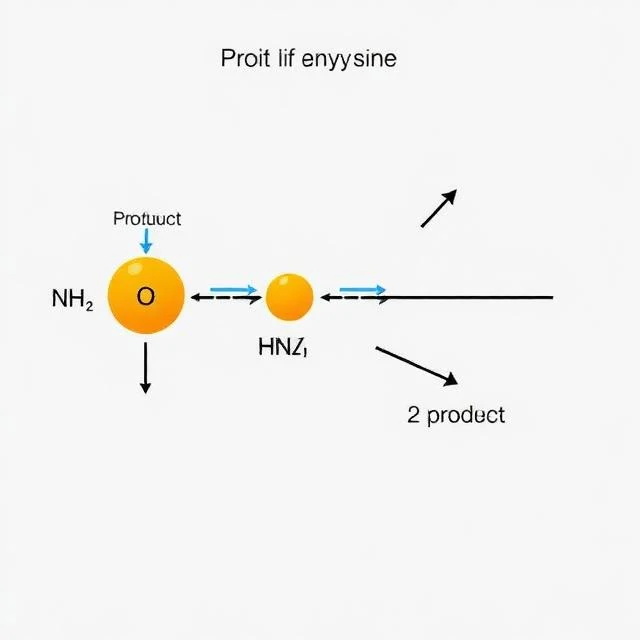
An enzyme is a protein that speeds up a chemical reaction. It does not get consumed in the reaction. It lowers the activation energy, allowing the reaction to proceed faster and under milder conditions. Without enzymes, the reactions that sustain life would be too slow to matter. Enzymes are the catalysts of biology.
Enzymes are specific. Each enzyme binds a particular substrate, like a key fitting a lock. The active site, a pocket on the enzyme's surface, holds the substrate in the right orientation for the reaction. Some enzymes are simple proteins. Others require cofactors, like metal ions or small organic molecules, to function. The rate of an enzyme-catalyzed reaction depends on temperature, pH, substrate concentration, and the presence of inhibitors or activators.
Enzymes are used in industry. Proteases in laundry detergent break down protein stains. Amylases in food processing convert starch to sugar. Cellulases in biofuels break down plant material. Polymerases in molecular biology copy DNA. Enzymes are also drug targets. Statins inhibit HMG-CoA reductase to lower cholesterol. Aspirin inhibits cyclooxygenase to reduce pain and inflammation. Many drugs work by blocking enzymes.
Enzymes are remarkable machines. They are also fragile. They denature at high temperatures or extreme pH. Engineering enzymes for stability and activity is a major field of research.
Comments
No comments yet. Be the first to share a thought.
Leave a comment