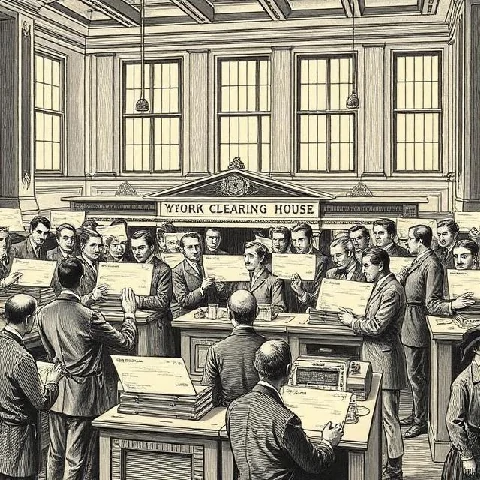
A clearing house is an intermediary institution that settles transactions between banks. It sits in the middle, receiving payment instructions from one bank and delivering them to another, then netting the obligations and transferring the difference. Clearing houses reduce the number of transactions and the amount of money that must move.
The first clearing house was the New York Clearing House, founded in 1853. Before it, banks exchanged checks individually, sending runners back and forth across the city. The clearing house centralized the process. Banks met daily, exchanged checks, and settled the net difference. It was faster and safer.
Modern clearing houses are electronic. The Clearing House operates CHIPS, which settles large international dollar payments, and RTP, a real-time payments network. The Federal Reserve operates Fedwire and FedACH. The Depository Trust and Clearing Corporation settles securities trades. Each handles a different type of transaction, but the principle is the same: net the obligations, settle the difference, reduce risk.
Clearing houses also manage risk. If one bank fails during the settlement process, the clearing house may have to cover the shortfall. That is why clearing houses require collateral and set membership standards. During the 2008 crisis, the failure of a major clearing member could have frozen the entire system. Central banks stepped in to prevent that. Clearing houses are too important to fail.
Comments
No comments yet. Be the first to share a thought.
Leave a comment