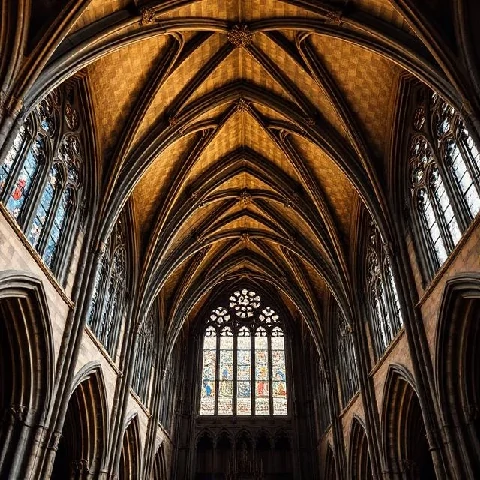
Before steel and reinforced concrete, the arch was the most elegant way to span an opening. Stack stones in a curved line and something remarkable happens: each block pushes against its neighbor, and the whole assembly carries the load above it down to the ground. The Romans used this trick to build aqueducts, bridges, and the Colosseum. Two thousand years later, the principle has not changed.
The arch works because of compression. Stone and brick are strong in compression but weak in tension, so a curved shape that keeps everything squeezed together is a natural fit. A wooden centering frame holds the pieces in place during construction; once the keystone — the final block at the top — is set, the arch stands on its own.
Variations abound. A semicircular Roman arch is stable but needs height. A flatter segmental arch saves space. A pointed Gothic arch directs thrust downward more steeply, allowing taller, thinner walls and bigger windows. Modern arches in steel and concrete can span far greater distances than masonry ever could.
Look at any old doorway or bridge and you are seeing a structural idea that refuses to go out of style.
Comments
No comments yet. Be the first to share a thought.
Leave a comment