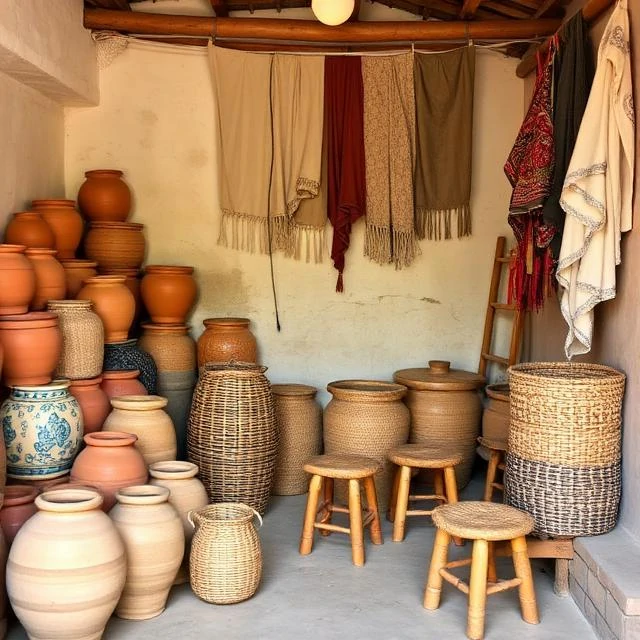
Material culture refers to the physical objects and artifacts created and used by a society. It includes everything from cooking pots and clothing to houses, tools, toys, and religious paraphernalia. These objects are not passive. They shape how people move, eat, work, and pray. A chair with a backrest encourages a certain posture. A smartphone reorganizes attention. A cooking pot determines what can be boiled and how many people can be fed.
Archaeologists rely on material culture because it survives when speech and gesture do not. But anthropologists studying living societies also pay close attention to objects. They ask who makes them, who owns them, how they are exchanged, and what they mean. A woven basket may be utilitarian in one context and a sacred heirloom in another. The same object can carry multiple meanings depending on who holds it.
What material culture includes
- Tools, weapons, and agricultural implements.
- Clothing, ornaments, and body modification.
- Architecture and domestic spaces.
- Ritual objects and symbolic regalia.
Studying material culture means taking objects seriously as social actors, not just background props.
Comments
No comments yet. Be the first to share a thought.
Leave a comment