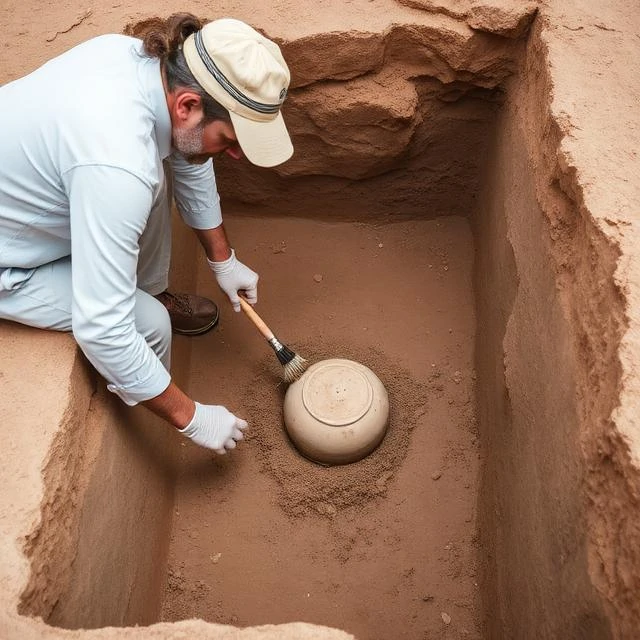
Archaeology reconstructs past human societies from what they left behind. Broken pots, buried walls, butchered bones, pollen grains, and abandoned tools all carry information. Archaeologists do not dig randomly. They survey landscapes, read satellite imagery, and sample carefully before a trowel touches soil. Context matters as much as the object itself: where something was found, what lay beside it, and which layer it came from.
The discipline spans deep prehistory and recent history. Some archaeologists study stone tools from millions of years ago; others excavate 19th-century factories or slave quarters. Methods include stratigraphy, radiocarbon dating, residue analysis, and increasingly DNA and isotope studies. Excavation is destructive, so recording is meticulous and publication is an ethical obligation. Many projects now involve descendant communities in decisions about what to dig and what to display.
Core tools of the trade
- Survey and remote sensing to locate sites without digging.
- Stratigraphic excavation to establish sequence and association.
- Dating methods from radiocarbon to dendrochronology.
- Laboratory analysis of artifacts, soils, and organic residues.
Every excavation destroys the site it studies. That fact shapes how archaeologists plan, record, and share their work.
Comments
No comments yet. Be the first to share a thought.
Leave a comment